People are usually surprised when you put these two countries side by side. One sits at the edge of Asia, the other at the edge of Europe. One eats kimchi, the other eats olives. One bows, the other shrugs with both hands in the air. On paper, nothing in common. Then you sit a Korean and a Greek at the same dinner table for three hours and watch what happens. They get each other faster than either of them gets a Dutch person. That is what this piece is about — why two ancient cultures sitting on opposite ends of the map keep arriving at similar answers to the same human questions.
Korea and Greece: Two Old Souls Who Speak Different Languages but Somehow Understand Each Other
A quick word before we get into it. Everything below is about social patterns and averages, not about people. Koreans vary as much as Greeks do, and you will meet exceptions to every line in this article. The research is here to give you a frame, not a label. We are drawing on Hofstede’s cultural data, Edward Hall’s communication work, OECD and Eurostat statistics, and a fair bit of research specifically on Korean society over the last decade.
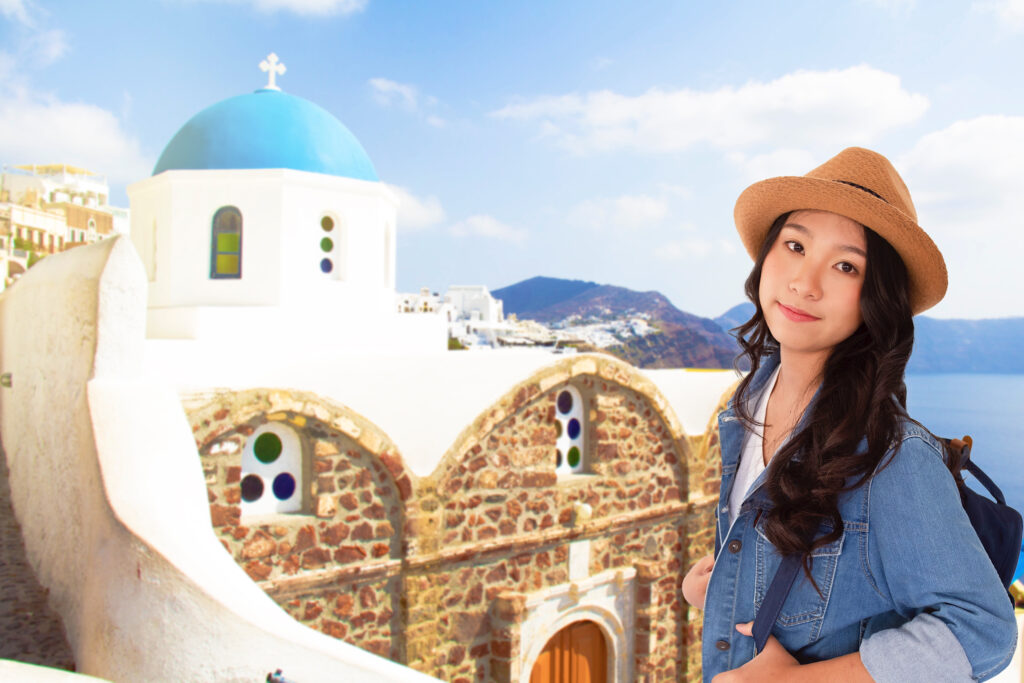
Mykonos Island
Starting Somewhere Unexpected: How Young People Date and Don’t Date
This is not usually where culture guides begin, but it is actually one of the most revealing places to look. Korean dating culture is structured, fast, and serious in ways that surprise many foreigners. Couples celebrate 100, 200, and 1,000 days together. Matching outfits are a real thing. Parents get involved earlier than most Westerners would expect. Surveys from the Korea Institute for Health and Social Affairs suggest that around 65% of Koreans in their 20s and 30s consider parental approval important when choosing a partner. In Greece, parental approval matters too, but the timeline is looser — Greek relationships often drift along for years before anything official happens, and meeting the family lands somewhere between a milestone and an ambush dinner nobody warned you about.
Where the two cultures genuinely overlap is in the seriousness of relationships. Casual dating is more of an imported concept in both places. Korean society places long-term commitment at the center of social life, and Greeks tend to do the same — relationships are expected to lead somewhere, and being in something undefined for years is not culturally comfortable in either country. Both cultures, though, are dealing with a sharp shift among young people. Korea’s marriage rate has dropped roughly 40% in the last decade, and Greece’s is not far behind. The pressure that shaped these traditions is the same pressure pushing young people to step away from them.
Why Young Koreans Are Leaving, and Why Young Greeks Already Did
Here is something the two countries share painfully. Both have a generation of young adults looking at the world their parents built and quietly deciding to live somewhere else. Greece had its big wave during the financial crisis — Eurostat data show roughly 500,000 Greeks left the country between 2010 and 2018, most of them under 35 and most of them educated. Korea is now living its own version of this, though for different reasons. The phrase young Koreans use is Hell Joseon — a darkly funny nickname for the pressure cooker of Korean society. Surveys from Statistics Korea suggest that around 75% of Koreans in their 20s have seriously considered emigrating, with Canada, Australia, and parts of Europe as top destinations.
The reasons are different on paper, but rhyme underneath. Greek young people left because of unemployment and a sense that no amount of effort would be rewarded. Korean young people are leaving because the system does reward effort, but the effort required is brutal — an eight-hour college entrance exam that essentially sets the trajectory of your adult life, 12-hour study days from age 15, and a job market where missing the right university quietly closes doors that never reopen. If you are a young Korean coming to Greece, you will find a country that already knows what it feels like to watch its best young people leave. There is an unspoken sympathy there.
The Pressure to Be Someone
Both cultures put enormous weight on what your kids do for a living. In Greece, the classic parental brag is profession — my son the doctor, my daughter the lawyer. Greece has around 6.3 doctors per 1,000 people, one of the highest ratios in the EU, partly because medicine is treated as a social elevator more than just a career. In Korea, the brag is the university. Educational success in Korea is more closely tied to lifelong socioeconomic status than in almost any other developed country, and South Korean families treat education as the single biggest driver of social mobility. A Korean parent dreams of my child at SNU the way a Greek parent dreams of my child, the cardiologist. It is the same psychological machinery in two different cultural wrappers. The pressure starts shockingly early and lasts well into adulthood.
This pressure has real costs in both places. Korea’s youth suicide rate has been a national tragedy for years, with academic pressure cited as a leading factor. Greece’s mental health statistics among young adults spiked during and after the crisis. The shared truth is uncomfortable: both cultures have built systems where family love and family pressure run on the same wiring, and the people most affected are the kids trying to live up to both at once.
Reading the Room: A Skill Both Cultures Teach Their Kids Without Saying It
Korea has a beautiful word for it: nunchi (눈치). Literally “eye-measure” — the instinctive skill of reading a room, sensing other people’s mood, intentions, and thoughts through non-verbal cues, tone, and silence. In societies where meaning is distributed across the situation and the relationship rather than packed into the words, this skill is essential. Greeks do not have a one-word version of it, but they do exactly the same thing. The eyebrow lift, the half-shrug, the soft pfff sound that means “absolutely not” without a single word being spoken. Both cultures train children from a young age to read tone, silence, body language, and context — and both consider it slightly rude when someone misses these signals.
A practical example. When a Korean says “let’s grab lunch sometime,” it is often less a literal plan and more a way of saying “I value our connection.” A Greek θα τα πούμε (“we’ll talk”) works exactly the same way. Both phrases sound like a plan and almost never are one. Surveys suggest that around 68% of young Korean adults prefer indirect communication in personal relationships, and Greek conversation similarly carries 70 to 80% of its meaning outside the actual words. If you grew up in either culture, you will save yourself a lot of confusion when you visit the other one.
Travel and the Way Young People Move
Young Koreans travel more than people realize. According to the Korea Tourism Organization, outbound travel before the pandemic hit around 28 million annual departures — astonishing for a country of 51 million. They favor structured trips, photo-rich destinations, food experiences, and increasingly Mediterranean countries. Santorini has been on the Korean travel radar for over a decade, partly thanks to Korean dramas and weddings filmed there. Greece typically sees 250,000 to 400,000 Korean visitors a year, most of them concentrated in Athens, Santorini, Mykonos, and Meteora.
What is interesting is how young Koreans travel compared to young Greeks. Korean travel tends to be efficient, well-planned, well-documented (Instagram and Naver Blog culture is strong here), and often shorter — long annual leave is rare in Korea, where the average paid leave actually used sits around 15 days according to OECD data, compared to about 25 days actually used in Greece. Greek young people travel longer and looser, often Interrail-style around Europe, often with friend groups, often without a fixed return date. If you are a young Korean in Greece on a 10-day itinerary and you meet a 22-year-old Greek who is “kind of just hanging out in the islands for the summer,” that is the gap in a nutshell. Same desire to see the world, two completely different relationships with time off.
Friendship Is Heavy in Both Places
Here is something neither culture talks about much, but both feel deeply. Friendships in Korea and Greece tend to be lifelong, dense, and demanding. Korean friend groups formed in high school or university often stay tight for decades — there is a concept of jeong (정), the emotional bond built through shared time, shared meals, and shared history. It is not casual. Greeks have parea, a close-knit friend group, which functions the same way: you grow up with these people, you go through life with them, and you bury each other’s grandparents. Around 85% of Greeks report having a close-knit friend group they see weekly, compared with under 50% in countries such as the Netherlands and Sweden. Korean numbers are similar in cities, though work hours can put real strain on them.
The shadow side of this is real, too. Both cultures can be hard to break into as an outsider. Friend groups are warm but sealed. Making a Korean friend in your 30s is famously difficult, and the same is true in Greek cities outside the tourist circuits. If you are moving to either country and the locals seem friendly but distant, it is not personal — you are meeting cultures where the friendship slots fill up around age 17. The good news is that once you do get in, you are in for life. People in both countries take their friends extremely seriously.
Hospitality: Different Words, Same Reflex
Greeks have filoxenia (φιλοξενία), “love of strangers.” Koreans have jeong — a deep, slowly accumulated warmth built through small repeated acts of care, especially around food. The mechanism is almost identical. In a Korean home, side dishes called banchan are passed around freely, and the table itself is a kind of welcome. In a Greek home, you are fed even if you said you were not hungry, and leftovers are pushed into your hands at the door. Both cultures share what anthropologists sometimes call “abundance hospitality” — the unspoken belief that a host’s worth is partly measured by how much they overfeed the guest.
National surveys suggest around 90% of Greeks consider warm hospitality a personal value, not just a habit. Korean culture rates similarly high in studies of in-group warmth. A Greek yiayia and a Korean halmeoni (grandmother) would understand each other perfectly without sharing a word — they would just take one look at the guest, decide they looked thin, and start cooking.
The Table Is the Living Room
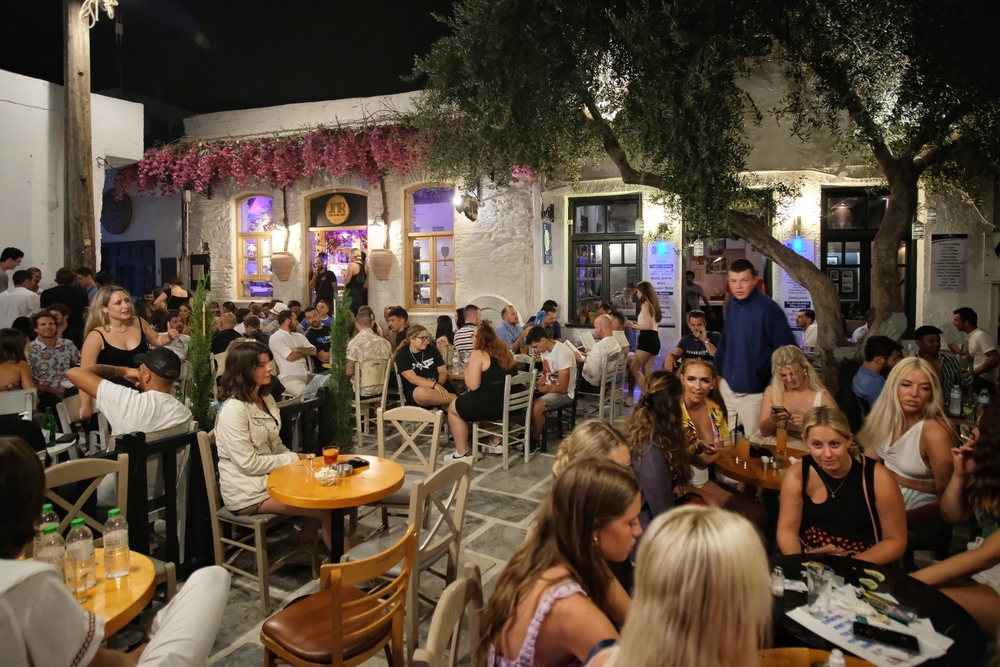
This is maybe the clearest overlap of all. In a Korean meal, food sits in the middle of the table, not on individual plates. Everyone reaches in, swaps bites, shares everything from the smallest side dish to the biggest stew. Now picture a Greek table. A dozen little mezedes in the middle, everyone reaching across each other, one bottle of wine that keeps somehow getting refilled, dinner stretching past midnight. In both cultures, the meal is the social space. It is not a fuel stop on the way to something else. Studies on Mediterranean and East Asian eating habits show that both Koreans and Greeks regularly spend 90 minutes or more on shared dinners, compared to roughly 30 to 45 minutes in many Northern European countries. Long shared meals are linked in psychology research to higher oxytocin levels and stronger social trust, and both cultures lean into this almost obsessively.
There is one difference in flavor philosophy worth noticing. Greek cuisine leans toward fewer ingredients done very well — olive oil, lemon, oregano, fish, lamb, and vegetables. Korean cuisine leans toward variety on the table — six, eight, or twelve small dishes at once, balancing spicy, sour, fermented, mild, hot, and cold. But the social function of food is identical: it is how affection gets expressed when words feel too direct.
Drinking, Differently but for the Same Reasons
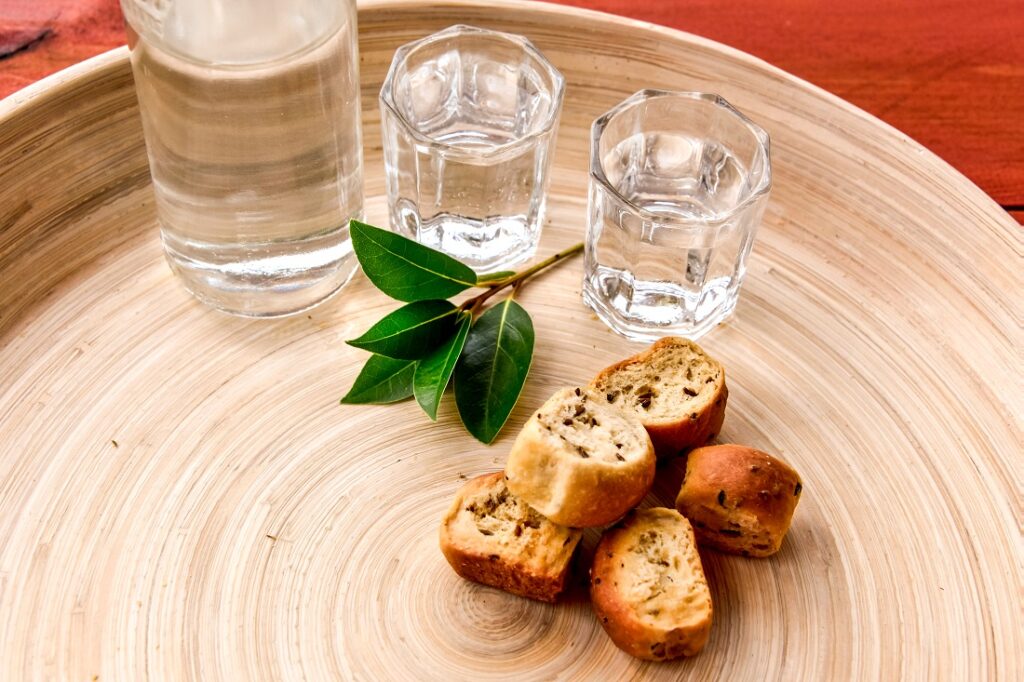
Both cultures use alcohol primarily as a social ritual tied to food, rarely as solo recreation. Korea has hoesik, the company dinner that often involves several rounds of soju and is, on paper, about food but in practice about emotional ice-breaking. Managers become mentors, coworkers become allies, and unspoken understandings take shape across the table. Greece has the long after-work tsipouro or ouzo with mezedes, or the Friday dinner that quietly becomes a five-hour conversation. Studies of Korean workplaces suggest around 87% of employees drink at least once a week, mostly in work-bonding contexts. Greeks drink less heavily by volume but use alcohol for the same purpose — slowing down, sharing food, lowering walls.
The cultures diverge in intensity. Korean drinking can be hard, and alcohol-related illness ranks among the leading health concerns in the country. Greek drinking tends to be paced and spread out with food, with less binge culture. Younger Koreans are pushing back hard, too — a 2023 JobKorea survey found that 64% of Koreans in their 20s prefer non-alcoholic work events, a shift that would feel completely familiar to a young Greek who would rather meet for a long coffee than another late dinner.
Hierarchy: Where the Two Cultures Quietly Part Ways
This is one of the few areas where Greece and Korea actually disagree. Korea scores 60 on Hofstede’s power distance scale, reflecting strong social hierarchies, and Confucian respect for age and seniority is baked into the language itself — different verb endings depending on whether you are talking to someone older, different bow depths, careful rules about who pours whose drink. A Korean colleague at hoesik will wait for the eldest to begin, hold the soju glass with both hands when receiving it, and turn their head slightly to drink. Greek workplaces are far more horizontal. Greeks deeply respect their elders, but they will cheerfully argue with anyone, regardless of age or title, and the formal hierarchy in conversation is much lighter.
If you are a young Korean working in Greece, the first surprise will be how casually people speak to their bosses. If you are a Greek working in Korea, the first surprise will be how much etiquette is encoded into every interaction. Neither is rude — they are two different ways of expressing respect. Greeks express it through warmth and inclusion. Koreans express it through form and care with detail.
Two Anxious Cultures with Different Coping Tools
One last overlap worth knowing. Greece scores around 100 on Hofstede’s uncertainty avoidance index, one of the highest in the world, and Korea scores 85, also near the top. Both societies are deeply uncomfortable with unpredictability — they just deal with it differently. Greeks handle uncertainty through relationships and personal networks (the cousin who knows someone, the friend whose brother works at the ministry). Koreans handle it through preparation, research, and rules. The most important factor in a Korean consumer decision is often the opinions of others — reviews, ratings, recommendations, word of mouth. A Greek about to buy a fridge will phone three relatives. A Korean will read 80 reviews online. Same underlying anxiety, two different rituals for managing it.
Where This Leaves Us
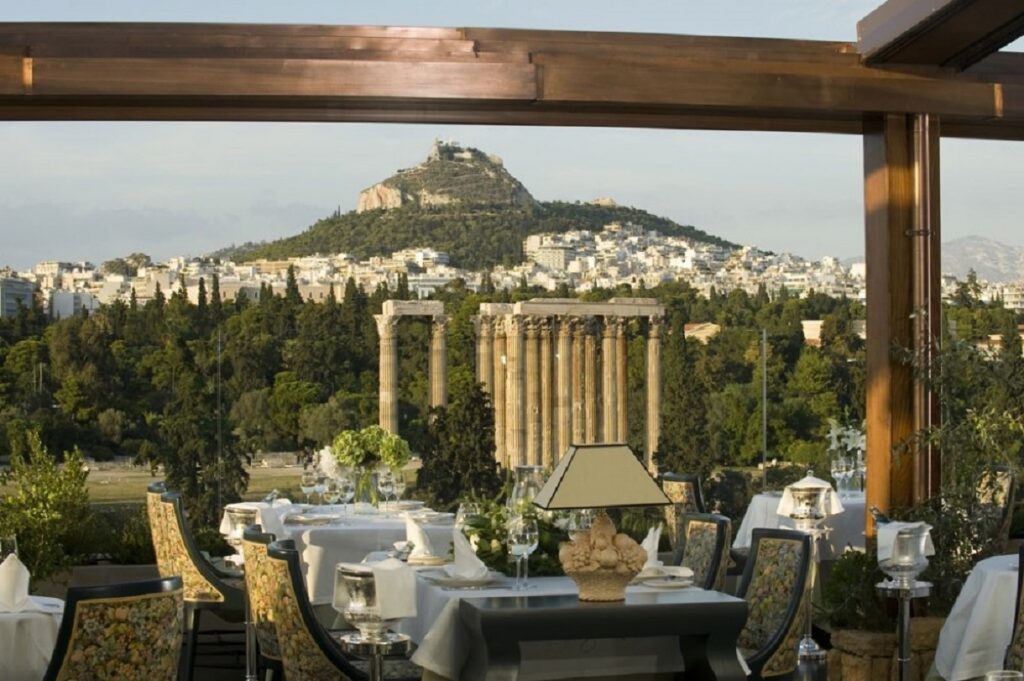
If you are Korean and you have come to Greece for a while — for work, for travel, for a longer stretch of life — what you will probably notice first is how familiar parts of it feel. The long dinners. The loud families. The pressure around what your kids do for a living. The way a stranger becomes like family after one good meal. The way nobody says exactly what they mean and everybody understands anyway. Underneath the olive trees and the bouzouki, there is a social logic that a Korean recognizes almost immediately. What is different is the pace, the lighter hierarchy, the more chaotic relationship with time, and the way Greeks treat rules as suggestions rather than instructions.
Spend long enough in both, and you start to suspect that ancient cultures, no matter where they grow up, end up answering the same big questions in similar ways. How do we belong to each other? How do we feed each other? How do we raise kids who make us proud without crushing them? How do we read each other without spelling everything out? Korea and Greece arrived at remarkably parallel answers, separated by 8,000 kilometers of geography and several thousand years of completely different history. That is not a coincidence. That is just what happens when two cultures decide, very early on, that people matter more than systems.
Greeks and Koreans share surprisingly similar cultural values despite living on opposite sides of the world. Both cultures emphasize family involvement in relationships, view dating as a path to serious commitment rather than casual encounters, and have experienced significant emigration of young people seeking better opportunities abroad.
Korean dating culture is structured and fast-moving, with couples celebrating relationship milestones like 100 and 1,000 days together, while Greek dating tends to be looser and more prolonged. However, both cultures view relationships as serious commitments leading to long-term partnerships rather than casual dating.
Parental approval is significant in Korean dating culture, with surveys showing approximately 65% of Koreans in their 20s and 30s consider parental approval important when choosing a partner. Parents become involved earlier in the relationship process than is typical in many Western cultures.
Like Korean culture, Greek society places value on parental approval in relationships, though the timeline is typically looser. Family involvement often comes as a significant milestone, sometimes unexpectedly during family dinners rather than at predetermined moments in the relationship.
Korea's marriage rate has dropped approximately 40% in the last decade, reflecting a significant shift among young people moving away from traditional relationship structures and long-term commitment expectations.
Greece's marriage rate has declined similarly to Korea's, though not quite as dramatically. Young Greeks have been stepping away from traditional relationship timelines and commitment expectations in recent years.
Between 2010 and 2018, approximately 500,000 Greeks, mostly under 35 and highly educated, left the country due to unemployment and the belief that effort would not be rewarded in the struggling economy.
Hell Joseon is a darkly humorous term young Koreans use to describe the intense pressure and stress of Korean society. It reflects frustration with the brutal demands of the education system and job market, where 12-hour study days and a competitive entrance exam essentially determine life trajectories.
According to Statistics Korea, approximately 75% of Koreans in their 20s have seriously considered emigrating, with Canada, Australia, and parts of Europe being top destination choices.
Young Koreans cite the extreme pressure of the education system, including an eight-hour college entrance exam that determines life paths, 12-hour daily study requirements starting at age 15, and a job market where attending the right university is crucial for career success.
Greek young people emigrated primarily due to lack of economic opportunity and unemployment after the financial crisis. Korean young people seek to leave due to excessive systemic pressure and competitive intensity, despite the system actually rewarding effort—the effort required is simply brutal.
The analysis draws on Hofstede's cultural data, Edward Hall's communication research, OECD and Eurostat statistics, and recent scholarship specifically examining Korean society to identify genuine cultural patterns.
No. The article emphasizes that observations about cultural patterns apply to social averages and general trends, not to all individuals. Koreans vary as much as Greeks do, and exceptions exist to every cultural generalization made.
Both Greeks and Koreans view casual dating as an imported concept rather than a native cultural practice. Relationships in both societies are expected to be serious and lead toward long-term commitment, making undefined relationships culturally uncomfortable.
Both Greek and Korean societies built strong cultural traditions around family involvement and long-term commitment. However, the same pressures that created these traditions are now pushing young people to leave their countries entirely, seeking relief from systemic stress and economic constraints.
Dating and relationship practices reveal fundamental cultural values about commitment, family, social structure, and individual autonomy. In Greece and Korea, dating customs expose deeper attitudes toward obligation, pressure, and life direction that extend beyond romance.
The article suggests that casual dating, without commitment expectations, is a more Western concept that both Greeks and Koreans find culturally uncomfortable. Both societies expect relationships to progress toward marriage or serious long-term partnerships.
While Greece's young people fled economic hardship and unemployment, Korea's young people flee despite economic success—because the path to that success requires extreme educational and professional pressure that many view as unsustainable and dehumanizing.
Comparing these distant cultures demonstrates that shared human values—family, commitment, and opportunity—transcend geography and language. The similarities suggest universal tensions between traditional expectations and modern aspirations that many young people worldwide are navigating.