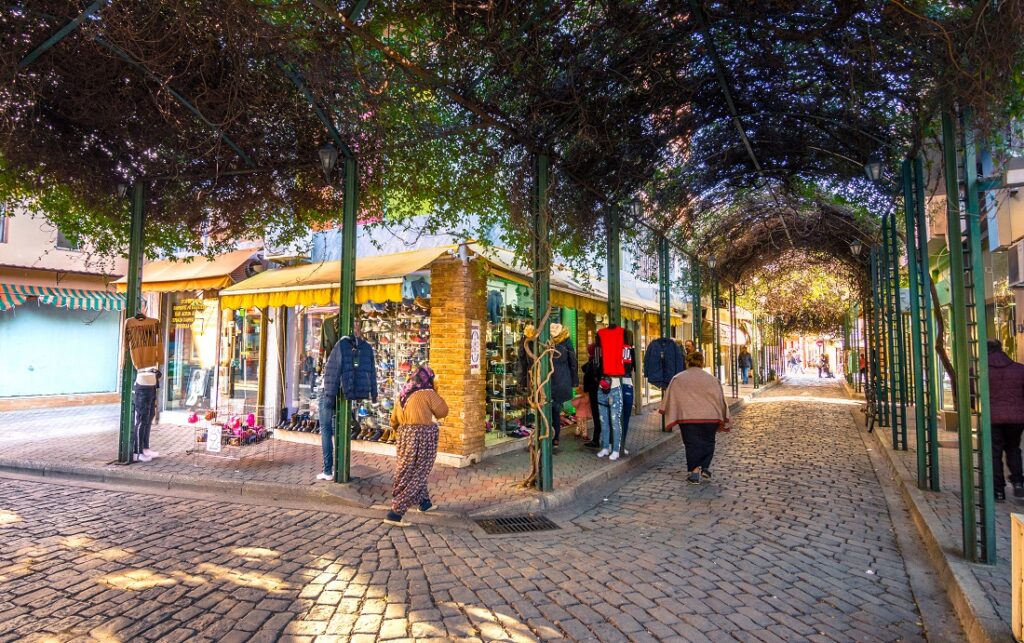
If you have spent any time in Greece, you have probably noticed something strange. The Cretan you met in Heraklion and the Corfiot you met in Corfu Town do not really feel like the same kind of person. The grandmother who fed you in a Maniot village and the architect you had ouzo with in Thessaloniki seem to belong to slightly different countries. They share a language, a flag, and a passion for arguing over the dinner bill, but underneath that, there is a whole world of micro-cultures shaped by very different histories.
This guide is written for travelers who want to understand those differences before they land. It is not a quiz, and it does not pretend that all Cretans are one way or all Northerners are another. Greeks are individuals, and stereotypes flatten people. What follows are honest, broadly accurate cultural patterns rooted in real history, geography, and migration, plus a look at the major Greek diaspora communities in the US, Australia, and Germany, which travelers also encounter when meeting Greeks abroad.
A small but important disclaimer up front: every generalization in this article has exceptions. A reserved Cretan exists. A bombastic Thessalonian exists. A non-religious diaspora Greek exists. These are tendencies, not laws.
Why Greece Has So Many Sub-Cultures: A Quick Historical Map
Greece is about the size of England, with a population of roughly 10.37 million in 2025, yet it contains a startling number of distinct local identities. The reason is simple: for most of the last thousand years, different parts of “Greece” were ruled by different foreign powers, often at the same time.
A rough sketch travelers can carry in their heads:
The Byzantine Empire ruled most Greek lands for centuries until the Ottoman conquest. Its cultural legacy is strongest in mainland centers, in Orthodox church traditions, and in Thessaloniki.
The Ottoman Empire ruled most of mainland Greece, Crete, the Aegean islands, and the north from the 15th to the 19th centuries (and longer in some regions). Its influence shows up in food, music, and vocabulary.
The Republic of Venice ruled the Ionian Islands for nearly 600 years and Crete for around 450 years (1211 to 1669). Its influence is visible in architecture, language, cuisine, and law.
Britain ruled the Ionian Islands from 1815 to 1864, leaving cricket, ginger beer, and certain civic traditions.
Italy occupied the Dodecanese islands from 1912 to 1947, leaving an architectural and culinary stamp.
Pontic Greeks, Asia Minor refugees, and other displaced groups arrived in waves in the 20th century, especially after the 1923 population exchange between Greece and Turkey, bringing their own cuisines, music, and dialects.
Modern Greece, in its current borders, was assembled piece by piece between 1830 and 1947. The country you see today is essentially a federation of regions that joined at different moments in history. That is why Crete feels different from Thessaloniki, and why Corfu can feel almost more Italian than Greek in some places.
Monemvasia – Laconia – Peloponnese
Northern Greece: Macedonia, Thrace, and Epirus
The Greek north, comprising Macedonia (a Greek region with deep Hellenic heritage), Thrace, and Epirus, sits on the Balkan border and has absorbed centuries of influence from the wider region: Slavic, Vlach, Pomak, Sephardic Jewish, Albanian, Pontic, and Ottoman. Thessaloniki, the country’s second city with a metropolitan population of about 815,000, is the cultural capital of this region and has historically been one of the most religiously and ethnically layered cities in the Eastern Mediterranean. Before the Holocaust, Thessaloniki had one of the largest Sephardic Jewish communities in Europe, a community sometimes called the “Mother of Israel.”
SeaFront – Thessaloniki
Foreign travelers often notice a few things in the north:
A slightly more reserved, less performative social manner compared to the South (this is a tendency, not a rule).
Cuisine with stronger Balkan and Asia Minor notes: bougatsa (a phyllo pie of Thessaloniki, ideally eaten standing up), spicy soutzoukakia meatballs of Smyrna origin, peppers and feta dishes, more frequent use of paprika and pickled foods.
Music and dance traditions are often slower and more melancholic, with regional variations like the Pontic lyra in communities with Pontic Greek heritage.
Cafés that lean toward the freddo and the espresso, but the iconic frappé, accidentally invented at the Thessaloniki International Trade Fair in 1957 by Nestlé employee Dimitrios Vakondios, was born here and remains a point of local pride.
Pamvotida lake at Ioannina, Epirus
Epirus, in the northwest, is mountainous, traditionally pastoral, and famous for stone villages (the Zagori region), polyphonic singing, and feta cheese. Thrace, in the northeast, includes Greece’s officially recognized Muslim minority, protected under the 1923 Treaty of Lausanne, made up mainly of Turkish-speaking Muslims, Pomaks, and Roma.
Central Greece, Athens, and the Peloponnese
Athens, with a population of around 3.13 million in its metro area in 2026, is where regional Greeks meet, mix, and complain about each other. Most Athenians today have roots elsewhere in the country, often only one or two generations back, and internal migration is a key feature of modern Greek identity.
The Peloponnese, the large peninsula south of Athens, is rural at its core and home to some of the oldest continuously inhabited regions in Greece. Each prefecture has its own micro-identity:
Messinia and Laconia are known for olive oil culture and a strong sense of local lineage.
Arcadia is mountainous and traditionally conservative, and it produced a disproportionate share of the diaspora that ended up in the United States.
Achaia and Corinth look outward to the Ionian and have a more cosmopolitan, trading feel.
Vathia – Mani – Laconia
The Mani: The Peloponnese’s Defiant Corner
The Mani peninsula, on the southern tip of the Peloponnese, deserves its own section. Maniots are famous, both in Greek folklore and in serious historical writing, for their fierce independence, blood feuds that persisted into the 20th century, distinctive tower houses built for defense, and a sense of cultural separateness from the rest of Greece. The region was never fully subdued by the Ottomans, and the local landscape, dry, rocky, and dramatic, shaped a culture that prized self-reliance and clan loyalty.
For travelers, the Mani offers stark beauty, austere villages, and a quieter, slower hospitality. It is not the warm “come in for raki” experience of Crete. It is more measured, sometimes wary at first, but deeply loyal once you are accepted.
Crete: An Island That Feels Like Its Own Country
If you visit only one part of Greece beyond Athens, and you want to understand how different a Greek subculture can be, go to Crete.
Crete is the largest Greek island and, for centuries, was its own world. It was ruled by Venice for roughly 450 years until the Ottoman conquest in 1669, with the siege of Candia (modern Heraklion) lasting an extraordinary 21 years. Then it was under Ottoman rule until 1898, became briefly autonomous, and finally united with Greece in 1913. That history has shaped a distinctive Cretan identity that many Cretans (or Kritikoi) will tell you straight: they are Greek, yes, but they are also Cretan first.
Venetian port Chania Crete
What makes Crete culturally distinct:
A unique dialect with vocabulary, expressions, and pronunciations not found in mainland Greek.
Music built around the lyra and laouto, not the bouzouki, with a sound and rhythm that feels older and more Eastern than mainland Greek music.
An especially intense form of hospitality known as philoxenia, where guests are treated almost ceremonially. In rural Crete, refusing food or drink can genuinely offend.
A cuisine focused on grilled meats, wild greens (horta), cheese (graviera), rusks (dakos), and raki/tsikoudia instead of ouzo.
Venetian-era architecture still defines the old quarters of Chania, Rethymno, and Heraklion.
Archaeological Site of Knossos – Heraklio – Crete
Travelers often describe Cretan hospitality as the warmest in Greece, and there is real cultural substance behind that reputation. But it is also a culture with a strong honor code, deep village loyalties, and historic associations with armed resistance against the Ottomans, against the Germans in WWII, and against various perceived insults to local pride. Take it seriously, and you will be welcomed warmly.
The Ionian Islands and Corfu: Greece’s Italian-Tinted West
The seven Ionian Islands, including Corfu, Kefalonia, Zakynthos, Lefkada, Ithaca, Paxos, and Kythira, were never under Ottoman rule for long. Instead, they spent nearly 600 years under the Republic of Venice (from 1204 to 1797), followed by short periods of French and Russian rule, then the British Protectorate from 1815 to 1864, before finally uniting with Greece.
This deeply shaped local culture. In Corfu in particular, Italian was widely spoken among the upper classes well into the 19th century, and historians have documented that more than half of the population of Corfu town in the 18th century spoke Venetian. A small community of Catholic, Italian-speaking Corfiots persisted into the 20th century. The British left their own marks: cricket is still played in Corfu town, ginger beer (tsitsibira) is a local specialty, and various civic structures bear British influence.
Melissani Cave, Kefalonia
What travelers notice in the Ionian:
Architecture that feels closer to Venice than to Mykonos: red-tiled roofs, pastel buildings, arcaded streets, bell towers instead of blue domes.
A cuisine with Venetian roots: dishes like pastitsada (a slow-cooked meat dish derived from the Venetian pastissada), sofrito (veal in white wine and garlic), and bourdeto (fish in spicy red sauce).
A musical tradition that includes the kantada, a serenade style with clear Italian influence, often sung in harmony.
A more “Western European” pace in some respects, though still recognizably Greek in warmth and family structure.
If your image of Greece is whitewashed Cycladic villages, the Ionian will surprise you. It is a different aesthetic entirely.
Aegina island
The Aegean Islands: Cyclades, Dodecanese, and the North Aegean
The Aegean islands are themselves divided into groups with distinct histories and feels.
The Cyclades (Mykonos, Santorini, Naxos, Paros, Sifnos, and many more) are what most people imagine when they hear “Greek islands”: whitewashed cubic houses, blue domes, narrow lanes. They share a maritime culture and a strong sense of local island identity. Each island has its own specialties: Santorini for its volcanic wines and fava; Naxos for its cheeses; Sifnos for its cookery and the chickpea stew revithada.
The Dodecanese (Rhodes, Kos, Kalymnos, Symi, Patmos, and others) in the southeast Aegean were under Italian rule from 1912 to 1947 and only joined Greece in 1948. The Italian period left behind serious architecture (especially in Rhodes town and on Leros) and culinary touches. Kalymnos, famous for sponge diving, sent thousands of migrants to Darwin, Australia, which we will return to shortly.
The North Aegean islands (Lesvos, Chios, Samos, Ikaria, Lemnos) lie close to the Turkish coast and have absorbed strong influences from Asia Minor. Lesvos is the home of ouzo. Chios is famous for mastic. Ikaria is one of the world’s “Blue Zones,” where residents are documented to live unusually long lives, and where local culture is famously, almost defiantly, relaxed.
Main port at Lemnos Island
Pontic Greeks, Vlachs, and Other Inner Sub-Cultures
Two important subcultures travelers should know about:
Pontic Greeks are descendants of Greek communities from the Black Sea coast of modern Turkey, who arrived in Greece in large numbers after the 1923 population exchange and again after the collapse of the Soviet Union in the 1990s. Pontic culture maintains its own dialect (sometimes barely intelligible to other Greeks), music (the Pontic lyra), dances, and cuisine. Pontic Greeks are especially numerous in parts of Macedonia. Estimates suggest that around one-third of Greek migrants in Germany self-identify as culturally Pontic.
Vlachs (also called Aromanians) are a traditionally pastoral, Romance-language-speaking population concentrated in the mountainous regions of Epirus, Thessaly, and Macedonia. Most Vlachs in Greece today consider themselves fully Greek but retain some linguistic and cultural traditions of their own.
There are also smaller groups: Arvanites (descendants of medieval Albanian-speaking communities fully Hellenized), Sarakatsani (a transhumant pastoral group), and the official Muslim minority of Thrace.
These are not separate ethnicities in any politically charged sense; they are simply part of the texture of who “the Greeks” actually are.
Greek Diaspora Cultures: USA, Australia, and Germany
Travelers often meet Greeks not in Greece but in the diaspora. With an estimated 5 to 7 million people of Greek heritage living outside Greece (according to the World Council of Hellenes Abroad and other estimates), the diaspora is roughly half the size of Greece’s home population. Three communities stand out.
Greek Americans
The United States is home to the largest Greek diaspora in the world. According to the 2020 American Community Survey, around 1.25 million Americans reported full or partial Greek ancestry, though community organizations estimate the total at closer to three million when including more distant heritage. Greek Americans are concentrated in:
Astoria, Queens (New York City): the most famous “Greektown,” still home to Greek bakeries, churches, social clubs, and restaurants, though the community has thinned since its peak in the 1970s.
Chicago: the historic Greektown along Halsted Street, anchored by the National Hellenic Museum, with over 89,000 Greek Americans in the metropolitan area.
Tarpon Springs, Florida: the most Greek city in America by proportion, with over 10% of residents claiming Greek ancestry. It was founded by Greek sponge divers, mostly from the Dodecanese and especially Kalymnos and Halki, who arrived in the early 1900s. It still hosts the largest Epiphany celebration in the Western Hemisphere.
Boston, Detroit, Baltimore, and parts of Utah (built on early 20th-century railroad and mining work) also have significant communities.
Greek American culture is shaped by waves of migration: an early 1900s wave, a post-WWII wave (1945–1965), and a recent crisis-driven wave after 2010. The community is deeply organized through the Greek Orthodox Archdiocese of America and groups like AHEPA (the American Hellenic Educational Progressive Association). Greek American identity often centers on church life, the annual Greek festival, and a fierce, sometimes nostalgic attachment to the “old country.”
Greek Australians
According to the 2021 Australian census, 424,750 Australians reported Greek ancestry, making them about 1.7% of the population. Around 92,000 were born in Greece. Melbourne is the heart of Greek Australia, often cited as one of the largest Greek communities outside Greece. The Greek Australian community is famously cohesive: studies have found Greek Australians have one of the lowest intermarriage rates of any major ethnic group in Australia across the first three generations, and 88% speak Greek, while 91% are Greek Orthodox.
Specific island sub-communities concentrated in specific cities:
Melbourne has heavy representation from the Peloponnese, Ithaca, Kastellorizo, and many other regions, with 181,184 people of Greek ancestry in Victoria alone (2021 census).
Sydney has its own large community.
Darwin is home to the largest Kalymnian community in the world outside Kalymnos itself, with around 10% of Darwin’s population of Greek (mostly Kalymnian) heritage. Kalymnos and Darwin are sister cities.
Greek Australian culture is built around Orthodox parishes, dozens of regional “brotherhoods” (Ithacan, Kastellorizan, Kalymnian, and many more), Greek-language schools, football clubs (notably South Melbourne Hellas), and large public festivals like Melbourne’s Antipodes Festival.
Greek Germans
This is the diaspora travelers in Europe most often encounter, and it has its own story. In 1960, Greece and West Germany signed a bilateral recruitment agreement, and tens of thousands of Greek workers, the Gastarbeiter, traveled mostly by ship and then train to Munich, where they were dispatched to factories and mines across West Germany. The journey for many began with a 28-day voyage and ended in dormitory housing called heims. Munich’s main train station became, in Greek popular music, a symbol of that whole era.
Today, more than 280,000 Greek citizens live in Germany, and the broader community of Greek heritage (including descendants) is much larger. Greek German communities concentrate in:
Stuttgart, Munich, Düsseldorf, Frankfurt, Cologne, and Hannover are all classic Gastarbeiter destinations.
Bielefeld in North Rhine-Westphalia, with a sizable community built around the Greek Orthodox parish.
A few key things to know:
The Greek-German community is unusually mixed in regional origin, but a large share has roots in northern Greece and in Pontic heritage.
After Greece’s 2009 debt crisis, a new wave of younger, often highly skilled Greek migrants arrived in Germany. This “neo-migrant” wave is culturally quite different from the original Gastarbeiter generation: more individualistic, more urban, less tied to traditional community structures.
The original Gastarbeiter generation often experienced harsh conditions and limited integration. Their children and grandchildren are now largely integrated into German society, though many remain active in Greek Orthodox parishes and Greek community associations.
Greek German culture sits somewhere between Greek and German rhythms. It is reserved by Greek standards, expressive by German standards, and intensely focused on family.
Religious life in the monasteries
A Note on Religion, Language, and the “Greek Identity”
Across all these subcultures, several things tend to be shared, though again with exceptions:
The Greek Orthodox Church plays a major cultural role, including for many non-religious Greeks, because it is tied up with national identity, holidays, and life-cycle events.
The Greek language is the connective thread. Roughly 99% of Greece’s population speaks Greek as a first language, and language preservation is central to the diaspora.
The family remains the basic social unit far more than in most Northern European or North American cultures.
These shared elements are why, despite all the regional variation described above, a Cretan, a Thessalonian, and a Greek Australian can still recognize each other instantly as belonging to the same world.
Practical Travel Tips: Reading the Region You’re In
For travelers, a few small observations that genuinely help:
Match the pace of the region. In Crete and the islands, slow down. In Athens and Thessaloniki, the normal urban tempo works.
Accept the food. In village settings, especially in Crete, the Mani, and Epirus, refusing food or drink is read as rude. A small taste is always better than a polite “no thanks.”
Be careful with politics and history. Names like “Macedonia,” questions about Cyprus, the Greek Civil War, the 1923 population exchange, and the German occupation are all sensitive. Listen more than you speak.
Tip modestly. Greek tipping culture is not American. A few euros for good service is generous.
Learn five Greek words.Yiásas (hello, formal), efcharistó (thank you), parakaló (please/you’re welcome), kaliméra (good morning), kalispéra (good evening). It earns enormous goodwill, especially outside Athens. Here is a great video on “how to learn basic Greek phrases.”
What You Should Know
Is Crete really that different from the rest of Greece?
Yes, more than most travelers expect. Centuries of Venetian and then Ottoman rule, geographic isolation, a distinctive dialect, unique music built on the lyra, and a fierce island identity make Crete culturally distinct. Cretans are fully Greek and often more passionately patriotic than mainlanders, but they often describe themselves as Cretan first, Greek second.
Why does Corfu look so Italian?
Because for nearly 600 years, the Ionian Islands were part of the Venetian Republic, never falling under long Ottoman rule. Venetian influence shaped Corfu’s architecture, cuisine, music, and even local vocabulary. A short British protectorate from 1815 to 1864 added another layer.
Are Northern Greeks really more reserved than Southerners?
This is a commonly cited tendency, and there is some cultural basis for it: the north has historically had more Balkan and Central European influence, while the south has stronger Mediterranean and maritime traditions. But it is a soft generalization, not a rule. Plenty of expressive Thessalonians and reserved Cretans exist. Travelers should treat individuals as individuals.
Which Greek diaspora community is the biggest?
By raw numbers, Greek Americans are the largest, with about 1.25 million reporting Greek ancestry in the 2020 US Census, and community estimates running closer to three million. Greek Australians (424,750 in 2021) are the largest as a percentage of their host country’s population, and Melbourne is often described as one of the largest Greek cities outside Greece.
What’s the largest Greek city outside Greece?
Melbourne is widely considered to host one of the largest Greek populations of any city outside Greece. Estimates vary significantly, with some sources citing up to 400,000 Greek Australians in Melbourne, while more conservative figures place the Victorian Greek-ancestry population at 181,184 (2021 census). The exact ranking depends on how you count ancestry vs. birthplace.
Are Greek Americans different from Greek Australians and Greek Germans?
Yes, in meaningful ways. Greek Americans skew older in their migration history, with deep roots in church life and organizations like AHEPA. Greek Australians are unusually cohesive linguistically and religiously, with very low intermarriage rates and a strong network of regional brotherhoods. Greek Germans are split between an older Gastarbeiter generation, often working-class with roots in northern Greece, and a newer post-2010 crisis-driven wave of skilled professionals.
Should I expect every Greek to be loud and emotional?
No. That is the most overused stereotype about Greeks. Some are; many are not. Cretans can be intense, Thessalonians can be calm and dry, Maniots can be famously taciturn, and diaspora Greeks vary enormously. Treat Greek people as the individuals they are, and you will travel better.
A final note: this guide describes broad cultural patterns shaped by real history. Every Greek you meet is an individual whose experience may match or completely contradict what is written here. Use it as a starting point, not a checklist.
This guide covers regional Greek sub-cultures shaped by different histories, including Cretans, Corfiots, Maniot villagers, Thessalonians, and diaspora communities in the US, Australia, and Germany. Each region developed distinct cultural patterns based on geography, migration, and historical influences.
Greece's diverse sub-cultures developed because different regions were ruled by different foreign powers for centuries. The Byzantine Empire, Ottoman Empire, Venice, Britain, and Italy all controlled different Greek territories at different times, leaving lasting cultural imprints on language, food, architecture, and traditions.
Venice ruled the Ionian Islands for nearly 600 years and Crete for around 450 years (1211 to 1669). This extended period of Venetian rule significantly influenced the architecture, language, cuisine, and legal systems of these regions.
The Ottoman Empire ruled most of mainland Greece, Crete, the Aegean islands, and the north from the 15th to the 19th centuries. Its influence is visible in Greek food, music, and vocabulary, shaping the culinary and cultural identity of many Greek regions.
Modern Greece was assembled piece by piece between 1830 and 1947. The country is essentially a federation of regions that joined at different moments in history, which explains why different areas feel culturally distinct.
Britain ruled the Ionian Islands from 1815 to 1864, leaving cultural influences including cricket, ginger beer, and certain civic traditions that still survive in local customs and traditions.
Italy occupied the Dodecanese islands from 1912 to 1947, leaving an architectural and culinary stamp on the region that remains visible in the islands' aesthetic and food culture.
The 1923 population exchange between Greece and Turkey resulted in waves of Pontic Greeks, Asia Minor refugees, and other displaced groups arriving in Greece. These communities brought their own cuisines, music, and dialects, enriching Greece's cultural diversity.
Thessaloniki, with a metropolitan population of about 815,000, is the cultural capital of Northern Greece. Historically, it was one of the most religiously and ethnically layered cities in the Eastern Mediterranean, home to one of Europe's largest Sephardic Jewish communities before the Holocaust.
The Sephardic Jewish community in Thessaloniki was sometimes called the 'Mother of Israel' due to its size and historical importance. Before the Holocaust, it was one of the largest Sephardic Jewish communities in Europe.
Northern Greece comprises Macedonia, Thrace, and Epirus. These regions sit on the Balkan border and have absorbed centuries of influence from Slavic, Vlach, Pomak, Sephardic Jewish, Albanian, Pontic, and Ottoman cultures.
Northern Greece was shaped by Slavic, Vlach, Pomak, Sephardic Jewish, Albanian, Pontic, and Ottoman influences due to its location on the Balkan border and centuries of interaction with neighboring regions.
Foreign travelers often notice that Northern Greece has a slightly more reserved, less performative social manner compared to the South. However, this is a tendency, not a rule, and individual variations exist throughout the country.
Bougatsa is a phyllo pie that originated in Thessaloniki in Northern Greece. It is traditionally eaten standing up and represents the distinctive Balkan and Asia Minor cuisine notes characteristic of the northern region.
Greece has a population of roughly 10.37 million in 2025, making it a relatively small country by European standards despite containing numerous distinct sub-cultures and regional identities.
Corfu can feel almost more Italian than Greek in places due to its nearly 600 years of Venetian rule. This extended cultural influence makes it distinctly different from mainland Greek regions in architecture, cuisine, and traditions.
Greeks are individuals, and stereotypes flatten people. While this guide discusses broadly accurate cultural patterns rooted in history, geography, and migration, every generalization has exceptions. Variations exist within all regions and sub-cultures.
Despite their distinct sub-cultures, Cretans, Corfiots, and Thessalonians share a common language, flag, and passionate tradition of arguing over the dinner bill. Their deeper differences lie in histories shaped by different foreign rulers and geographic influences.
No, not all Cretans are culturally the same. While Cretans share certain regional characteristics, individual Cretans vary significantly. This guide discusses tendencies and patterns, not absolute rules or stereotypes.
Travelers encounter major Greek diaspora communities in the United States, Australia, and Germany. Understanding these communities helps travelers better understand Greeks they meet abroad.
The Byzantine Empire ruled most Greek lands for centuries until the Ottoman conquest. Its cultural legacy remains strongest in mainland centers, in Orthodox church traditions, and particularly in Thessaloniki.
Crete and Thessaloniki feel different because they have distinct historical experiences. Crete was ruled by Venice for 450 years, while Thessaloniki was influenced by Byzantine and Ottoman rule, plus layers of Balkan and Mediterranean cultures, creating separate cultural identities.
No, this guide is not a quiz. It is written for travelers who want to understand cultural differences before they land in Greece. It provides honest, broadly accurate cultural patterns rooted in real history, geography, and migration without requiring memorization.
Travelers should remember that every generalization in this article has exceptions. While cultural tendencies exist, they are not laws. A reserved Cretan exists, a bombastic Thessalonian exists, and non-religious diaspora Greeks exist, showing that individual variation is always present.