


The most striking symbolism emerges from the monsters of the myth themselves. Nolan preserves almost every mythical creature Odysseus encounters, yet the fantastical dimension recedes, and the world grows darker, heavier, more psychological. The monsters of the outer world become reflections of the monsters within. The Cyclops, the Sirens, Circe — all appear as projections of a soul unable to make peace with itself. In Nolan’s vision, the Sirens no longer seduce men through desire; they force them to confront truths buried deep in the subconscious, truths they have spent a lifetime avoiding.
This shift reshapes the very meaning of kingship and fatherhood. It becomes the lesson Odysseus ultimately passes to his son, Telemachus, who sees him as a model of manhood and leadership. In Nolan’s Odysseus, fatherhood is not authority — it is the acceptance of responsibility for one’s mistakes. The throne of Ithaca is no longer a trophy of victory, but a place of reckoning.
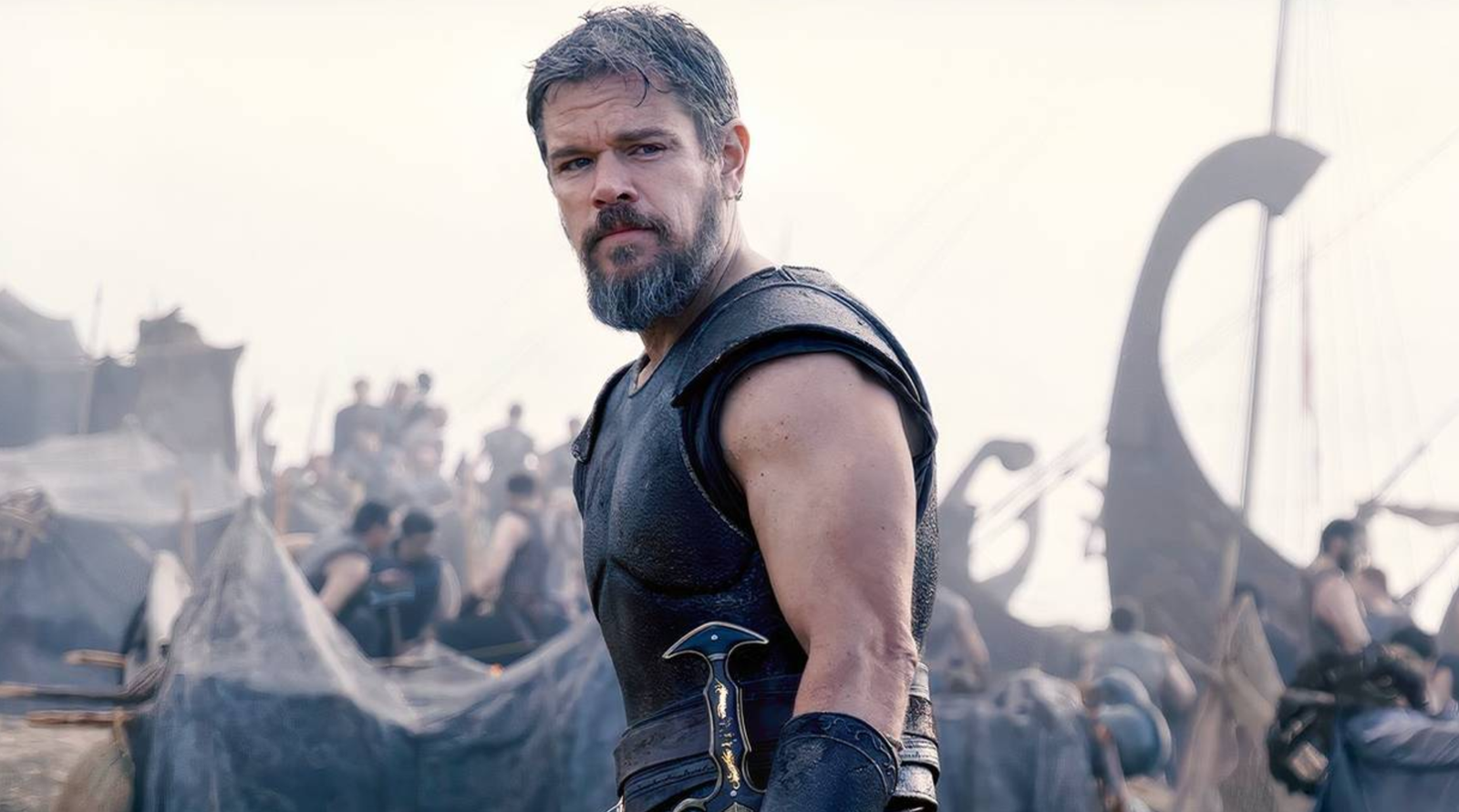
This shift reshapes the very meaning of kingship and fatherhood. It becomes the lesson Odysseus ultimately passes to his son, Telemachus, who sees him as a model of manhood and leadership. In Nolan’s Odysseus, fatherhood is not authority — it is the acceptance of responsibility for one’s mistakes. The throne of Ithaca is no longer a trophy of victory, but a place of reckoning.
Perhaps the film’s most melancholic symbol is distilled in Penelope’s words. When she tells Telemachus that Ithaca cannot return to the prosperity it once knew — “That world is gone” — Odysseus ceases to be merely a man returning home. He becomes the emblem of an entire era that will never return, a world that cannot be rebuilt as it was. In Nolan’s hands, Odysseus’ nostos is not a triumphant homecoming but a painful reconciliation with loss.
And here lies the core of the film’s impact: Nolan does not give us the Odysseus we memorized in school, but an Odysseus‑mirror — a figure through whom the modern viewer sees their own guilt, their own wounds, their own vanished world.
How Odysseus Died?

Turning now to Homeric mythology. The legendary Odysseus, the emblematic king of Ithaca, stands among the most significant heroes of Greek myth. After ten years of war in Troy and another ten years of perilous wandering before reaching home, Odysseus finally returned. But like every mortal, he eventually faced the inevitable end. What, then, was the fate of the resourceful Odysseus?
Renowned for his intelligence and cunning, Odysseus played a decisive role in the Trojan War. He conceived the famous Trojan Horse, which led to Troy’s downfall. His cleverness and his unwavering determination to return home made him one of antiquity’s most beloved and ingenious heroes.
Upon his return to Ithaca, Odysseus found his palace overrun by suitors seeking Penelope and his throne. With the help of his son, Telemachus, and a few loyal companions, he slew the suitors and restored order to his kingdom.
The Inglorious End of Odysseus
Despite a life filled with triumphs, Odysseus’ end is shrouded in mystery and contradictions. Ancient sources offer different accounts, each carrying its own mythic weight.
One tradition claims he died peacefully in old age, after many quiet years in Ithaca. Yet the prophecy of Tiresias during Odysseus’ descent into the Underworld suggests a different fate. According to the prophecy, Odysseus would die far from the sea, by “the hand of an uninitiated man.”
The prophecy was fulfilled when Odysseus traveled to a distant inland region, following Tiresias’ instructions to carry an oar and place it in a land where people did not know the sea. There, a young farmer, confused by the oar Odysseus held, struck him fatally, believing him to be a threat.
The Symbol of Perseverance
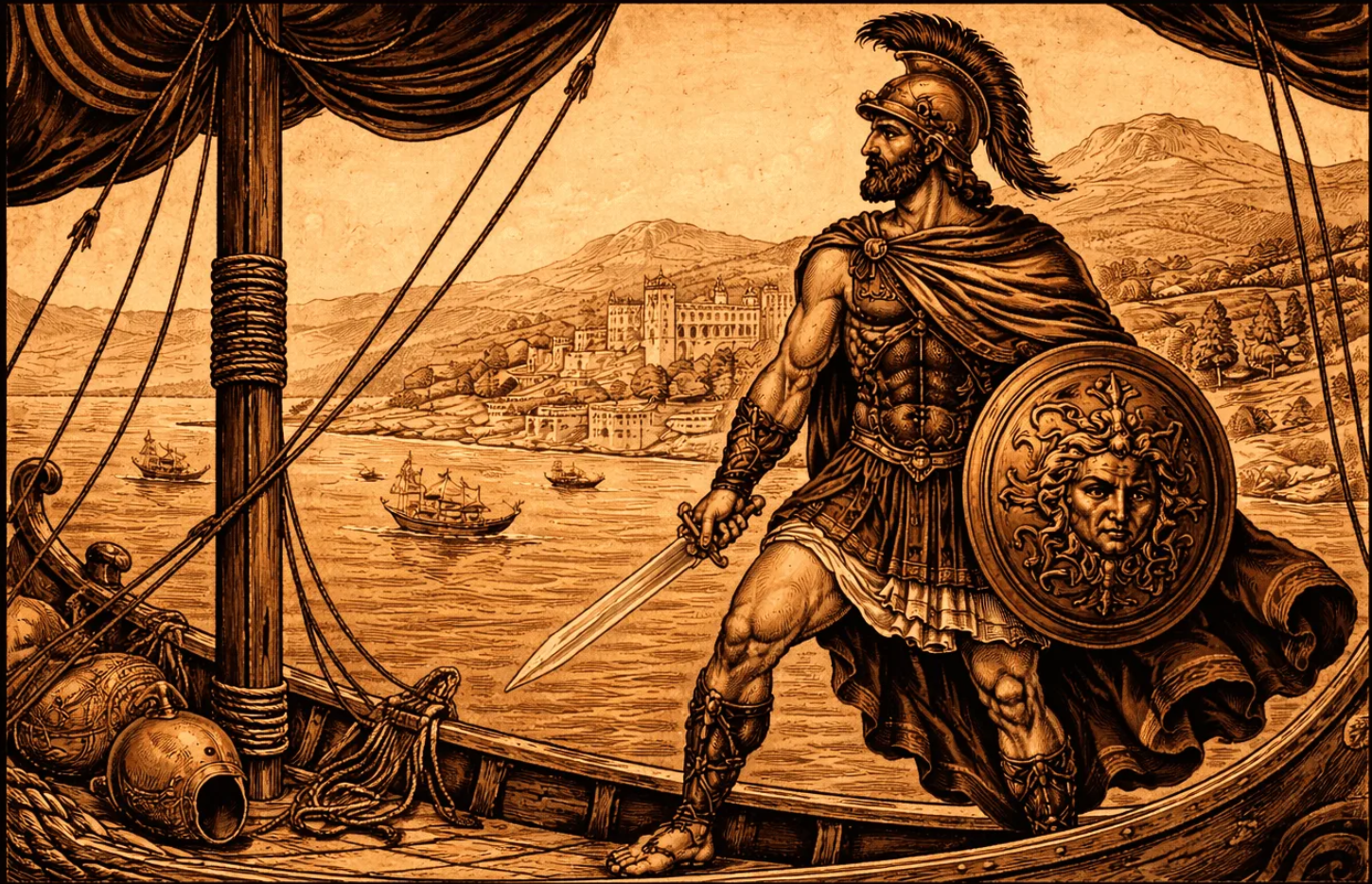
Odysseus’ death did nothing to diminish his legacy. The resourceful king of Ithaca remains a symbol of human will and endurance. His journey from Troy to Ithaca — and the tragic completion of his life — continues to inspire literature and art.
His adventures and his end remind us of the fragile nature of human existence and the indomitable strength of the human spirit. A hero not only of his own era but of all eras, Odysseus endures as an eternal myth.
The Palace of the Legendary Odysseus
On the eastern side of the island, at the port of Piso Aetos, lie the ruins of an ancient city. The foundations of “Odysseus’ Castle” were discovered in 1873 by Heinrich Schliemann, the archaeologist of Troy. Although no official link to the resourceful king has been confirmed, the site continues to attract visitors to Ithaca. Perhaps it is the allure of the mythical king, or perhaps the enchantment of the landscape — a vast sea panorama at the strategic point connecting the island’s eastern and western coasts.
The Most Remarkable Beaches of Ithaca
Ithaca is not only the land of Odysseus and his myth. It is an island of striking natural beauty — emerald shores, dramatic cliffs, and waters so clear they seem carved from glass. Among its many enchanting corners, three beaches stand out as essential experiences for any traveler.
Afales Beach — Ithaca’s Wild Northern Jewel

Afales Bay is embraced by towering cliffs and dotted with a chain of smaller beaches, each with its own character of rock, pebble, and impossibly blue water. The landscape is dramatic, almost untamed: sheer, rugged rock faces plunge straight into the sea, while dense vegetation reaches all the way to the shoreline. Swimming in Afales is not a single moment — it is a sequence of discoveries. Each small beach in the bay offers a different shade of blue, a different angle of the cliffs, a different whisper of the wind.
At the far end of the bay lies Platia Ammos, Ithaca’s only beach with pure white sand. Hidden, secluded, and accessible only by sea, it feels like a secret the island reveals only to those who seek it.
Skinos — The Green Embrace of Eastern Ithaca

Skinos Beach is a wide, serene bay on the eastern side of Ithaca’s main harbor. At its deepest point lies the beach that shares its name — a quiet, luminous strip of coastline where the sea opens before you like a calm, endless mirror.
It is the ideal refuge for travelers who love beaches wrapped in lush greenery. The trees lean toward the water, the shade blends with the turquoise, and every swim feels like stepping into a postcard that breathes.
Gidaki — The Island’s Hidden Paradise

Gidaki is widely considered one of Ithaca’s most beautiful beaches — a secluded, almost otherworldly paradise accessible only on foot or by sea. Its isolation is part of its magic: the journey becomes a rite of passage, and the reward is a beach that feels untouched by time.
From the marked trail, the walk takes about thirty minutes through fragrant vegetation and views that unfold gradually. The shorter route is to drive to Skinos Beach and follow the coastal path that leads directly to Gidaki.
Once you arrive, the effort dissolves instantly. The water is luminous, the silence profound, and the entire cove feels like a sanctuary carved for those who seek beauty away from the world’s noise.


