

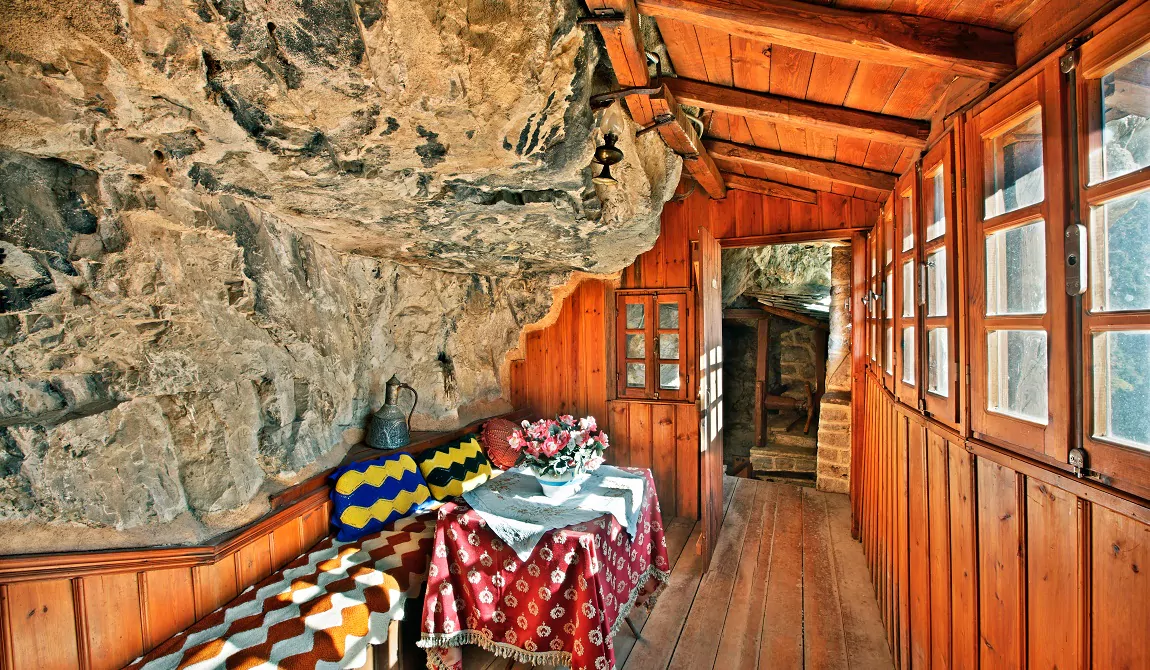

The Holy Monastery of Kipina is located in Tzoumerka, Ioannina. It is one of those monasteries that will leave you speechless with the natural landscape surrounding it. Being part of a steep vertical rock, inside which the monastery was carved, the first thing you will feel as you lift your gaze and face it will be nothing but absolute awe. So, let’s learn about the long history it carries, but also admire the immersive scenery that surrounds it.
Religious tourism: Five monasteries ornaments of Orthodoxy
Kipina Monastery: A monastery made of stone

The good road reaches the monastery at the root of its rocks. From then on, you will need to follow the uphill alley that carves through the stones and leads to your entrance point to the monastery. The view of the Kalarrytiko River will once again take your breath away, and this time, you will cross the area successfully.

Kipina Monastery: A highly ascetic interior


In the central church of the single-aisled basilica monastery with the rocky roof, you can admire hagiographies that date back more than four centuries. However, several sacred relics were stolen in the 1970s. When you exit the temple, you will find the entrance to the approximately three hundred meters cave of Kipina hidden. The cave has an environment full of stalagmites and stalactites and once served as a shelter. However, it is not open to visitors today.

Kipina Monastery: The history of its construction

To know: The monastery during the summer months remains open from morning to early afternoon, if you find it closed, you can get its keys from the café in the village of Kalarrytes.

The Holy Monastery of Kipinas is definitely one of the stops that you should make if you find yourself visiting Ioannina, so put it in your next travel program.
Travel to Greece – Google News – Follow us
Five impressive gorges of Greece worth walking
Epirus: Konitsa Ioannina – Chioniades the small Greek village where more than 70 painters were born
One-day excursion to Mega Spilaio: The oldest monastery in Greece
Follow exploringgreece.tv on Instagram and Facebook
Frequently Asked Questions
Kipina Monastery is located in Tzoumerka, Ioannina, Greece, approximately 70 km from the city of Ioannina. You can find it on the way to the village of Kalarrytes. The monastery is carved into a steep vertical rock formation, making it one of the most visually stunning monasteries in the region.
The exact founding date of Kipina Monastery is shrouded in mystery. According to historical records, Archbishop Gregory founded the monastery dedicated to the Dormition of the Virgin Mary in 1212. However, legend suggests it was founded in the 13th century when monks discovered an icon of the Virgin Mary glowing in the rocks. The monastery experienced its greatest prosperity during the 18th century and even operated a secret school during the Turkish occupation.
Inside Kipina Monastery, visitors can admire hagiographies dating back over four centuries in the central single-aisled basilica church with a rocky roof. The interior features small rooms with natural light, low beds, and traditional Epirus carpets. There is also an approximately 300-meter cave hidden at the exit of the temple, though it is not currently open to visitors. The cave contains stalagmites and stalactites and once served as a shelter.
To reach Kipina Monastery, take the good road that leads to the base of the rocks. From there, follow an uphill alley carved through the stones to the entrance. Before entering, you will cross a historic wooden bridge built during the Turkish occupation with innovative engineering and a lever mechanism that created a safety gap. Note that some areas require bending down due to the rocky slope, and visitors must be prepared for a moderate hike.
Kipina Monastery remains open during summer months from morning to early afternoon. If you find the monastery closed, you can obtain the keys from the café in the village of Kalarrytes. It is recommended to check ahead during off-season months or plan your visit during the official open hours to ensure access to this remote mountain monastery.


