


It is one of the most famous autumn and winter destinations in Greece. And one of the most beloved. Every year visitors from all over Greece arrive there who want to spend some quite and relaxing moments in nature. Apart from the fact, however, that it is a particularly famous destination, it stands out for something else that many do not know. This famous part of Greece is unknown when it was created! And while for most villages there is an exact date of establishment, for this village the date is completely unknown. It is Zarouchla!
The famous part of Greece that is unknown when it was created
Zarouchla is the jewel of Achaia and of Peloponnese (on the border with Corinthia) and stands imposing at just over 1,000 meters altitude. There, on the southeastern slopes of Aroanion, you can admire this gem of nature that generously fill you with beautiful images and sounds. It is a village with few inhabitants but many visitors mainly from Athens. It is also quite close, that it makes it the best solution for the weekend.
Apart from the green landscapes and the beautiful walking trails, there is something else you learn when you reach the village. That no one knows when it was created! We can only speculate. The two temples that exist in the village help us in this. One is from the 12th and the other is from the 13th century. Nothing, however, indicates whether the village was inhabited earlier and especially how much earlier! The temple, however, reveals that Zarouchla was inhabited during the Frankish occupation.
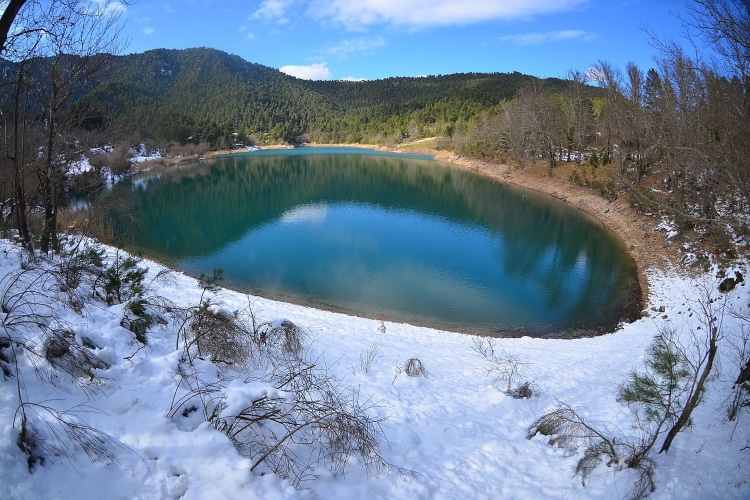
Photo: Georgikopoulos Manolis – Work of the one who uploads it, CC BY-SA 4.0
What you’re going to see and what you’re going to do in Zarouchla
What’s certain is that you’ll fill your lungs with fresh air and you are going to charge your batteries. Zarouchla, one of the Kloukinochoria as it is called, promises to steal your heart with its natural beauty. I’m sure your trip there won’t be just one time. Every time we visit it, we can’t get enough of the walks in the surrounding magical locations and the long hanging out in the village square. You enter for a few 24 hours in the rhythms of a mountainous, provincial settlement and relax while enjoying the scenery.
Don’t miss:
Take a walk in the beautiful lake of Tsivlou and lake Doxa. Make sure you have space on your camera or phone for multiple photos.
Choose traditional accommodation that will remind you of the houses you used to read in fairy tales. Your stay will be amazing.
Read also:
The Greek village onions that has entered the guinness book
Timboulis: The mysterious house of Greece with dolls that change places
Frequently Asked Questions
The exact creation date of Zarouchla is unknown, making it unique among Greek villages. However, evidence from two churches in the village—one from the 12th century and another from the 13th century—indicates that Zarouchla was inhabited during the Frankish occupation. The precise founding date remains a mystery, though it was definitely established before the 12th century.
Zarouchla is located in the Peloponnese region of Greece, specifically in Achaia on the border with Corinthia. The village sits at an altitude of just over 1,000 meters on the southeastern slopes of Aroanion mountain. It is relatively close to Athens, making it an ideal weekend destination.
Zarouchla offers visitors beautiful walking trails through natural landscapes, relaxation in the village square, and visits to nearby lakes including Lake Tsivlou and Lake Doxa. The village is known for its autumn and winter appeal, traditional accommodation options, fresh mountain air, and peaceful provincial atmosphere ideal for a relaxing getaway.
Zarouchla is famous as one of the most beloved autumn and winter destinations in Greece, particularly popular with visitors from Athens. It is known as the jewel of Achaia and the Peloponnese, celebrated for its stunning natural beauty, mountain scenery, and charm as part of the Kloukinochoria villages. It's also notable for the mystery surrounding its unknown founding date.
The primary historical evidence of Zarouchla's past comes from two churches located in the village. One temple dates from the 12th century and the other from the 13th century, confirming that the village was inhabited during the Frankish occupation period. However, no definitive records indicate exactly when the village was first founded or how much earlier it may have been inhabited.


