


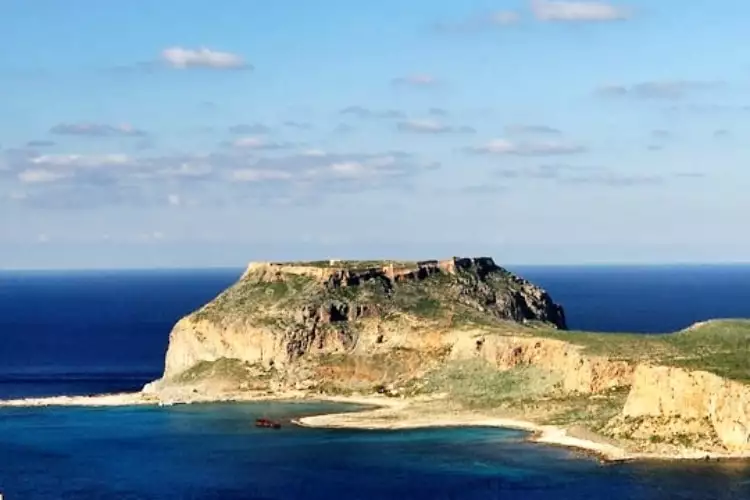
The privileged position of Crete has always been a challenge for its occupation by many nations. Be it Phoenicians, Achaeans, Saracens, Arabs, Romans, Venetians and even pirates. One of the most famous pirate shelters in Greece is located at the northwest end of Crete. It is close to the lagoon of Ballos with its exotic waters. We are talking about the Greek pirate island of Imeri Gramvousa. The pirate kingdom.
The pirate kingdom and its history
Imeri Gramvousa is famous for its beautiful beach, but also for its imposing Venetian castle. The island changed hands many times because of its strategic position and was always an apple of discord between Venetians and Turks. In later times, even the Greek pirates used it as a base. For three or a more years they were raiding and spreading terror in the Aegean Sea.
Gramvousa was originally the first part of Crete to be liberated from the Turks. It became a haven for more than 3,000 residents and the base of operations for rebel groups. From the free Gramvousa, the revolutionary bodies named “Kalisperides” were raiding and spreading terror to the Turks, who, as a distraction, also organized the Zourides, armed bodies of men, which set traps to the Christians.
However, due to the very difficult living conditions, the Gramvousian people systematically indulged in piracy. During a period, all passing ships between Gramvousa and Antikythera island were raided indiscriminately. This, at one point, raised the public opinion in Europe against the pirates. With the agreement of the Greek Government, the fleets of England and France occupied the castle located on the island in 1828 and expelled the pirates. With the signing of the protocol of London, Crete remained occupied by the Turks and in 1831 the Russian garrison of Gramvousa, handed the castle back to the Turks, to the great glory of international justice at that time.
Panagia Kleftissa on the Greek island
One of the paradoxes that existed, had to do with a church that was on the island. The church was originally dedicated to the Annunciation of the Virgin Mary. Later, when the island was fortified and passed into the hands of the rebels,the church was named Panagia (Virgin Mary) Kleptapodocha (the smuggler) or Kleftrina (the thief) or Kleftissa (thief). The resident pirates went there kai took their voes asking her not to punish them for their raids. They believed that with God no one could take on. They dedicated a tenth of their prey to the church, begging for divine favour and help.
Exploring Greece you discover many such similar stories like the one with the Greek pirate-island…
The Greek village you only go to… either walking or by boat
Frequently Asked Questions
Imeri Gramvousa is a Greek island located at the northwest end of Crete, near the Ballos lagoon. It is famous for being one of the most notorious pirate shelters in Greece, featuring a beautiful beach and an imposing Venetian castle. The island served as a base for Greek pirates during the early 19th century who raided ships in the Aegean Sea.
Gramvousa changed hands many times due to its strategic position. The island was occupied by various powers including Phoenicians, Achaeans, Saracens, Arabs, Romans, Venetians, and Turks. During the Greek War of Independence, it became a haven for rebels and pirates, and was later occupied by English and French fleets in 1828.
The Greek pirates used Gramvousa as their operational base for three or more years, during which they systematically raided passing ships and spread terror throughout the Aegean Sea, particularly between Gramvousa and Antikythera island.
Panagia Kleftissa is a church on Gramvousa originally dedicated to the Annunciation of the Virgin Mary. When the island was fortified and controlled by rebels and pirates, the church was renamed Kleftissa, meaning 'the thief.' The resident pirates would visit the church to take vows and ask for divine protection, dedicating a tenth of their stolen prey to the church.
The pirate occupation of Gramvousa ended in 1828 when English and French fleets, with the agreement of the Greek Government, occupied the castle and expelled the pirates due to rising European public opinion against them. In 1831, the Russian garrison handed the castle back to the Turks following the Protocol of London.


