


While Thebes may not be a top tourist destination in Greece, it’s renowned for its rich history, earning it a spot among Europe’s oldest cities. Legend has it that Cadmus, a figure of Greek mythology, founded this city in Viotia. However, Homer’s epics credit its creation to the brothers Zethos and Amphion. As the story goes, Amphion’s lyre-playing enchanted the stones, causing them to form the famed walls of the seven-gated city on their own. Thebes and its port have a storied past that continues to this day.
Thebes and its legendary port
The Port of Ancient Anthedon, one of Thebes’ most historic sites, appears untouched by time. This ancient city, once a bustling marketplace, was the counterpart to the powerful city of Thebes, where 100 triremes were constructed following a Theban decree.
The port is arguably the best-preserved ancient port in Greece, with many parts still visible above water. This is noteworthy as most ancient ports are now submerged due to rising sea levels. The ancient city of Anthidon served as a crucial port and connection between Evia and Boeotia. Here, Ancient Phoenician ships docked to transport purple shells used to produce a renowned dye.
The Port of Anthidona was spacious for its time, featuring two jetties. Its entrance could be sealed with a chain to safeguard against enemy attacks and strong northern winds. Epaminondas, a Theban general, built ships in this port intending to overthrow Athens.
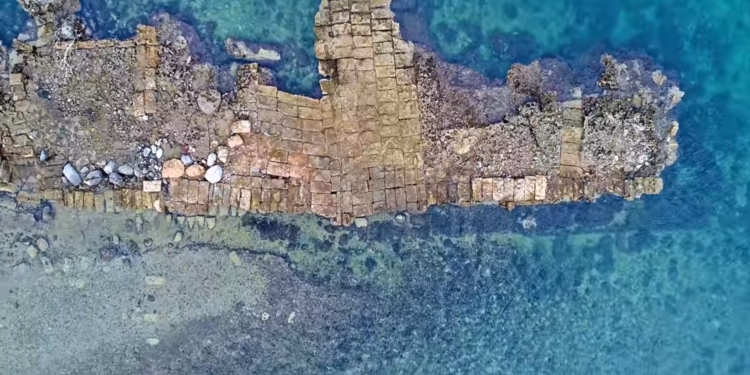
During the Byzantine era, the city experienced a decline due to pirate invasions. This led its residents to retreat inland, particularly to the northern slopes of Mount Messapio, now known as Ktypas. Here, they established a pastoral settlement that became the heart of the present-day community of Loukisia. As they moved from the coast to the mountain’s base, they transported construction materials from previous structures. These materials were used to build the small church of Ag. Georgiou, which stands outside the village of Loukisia today.
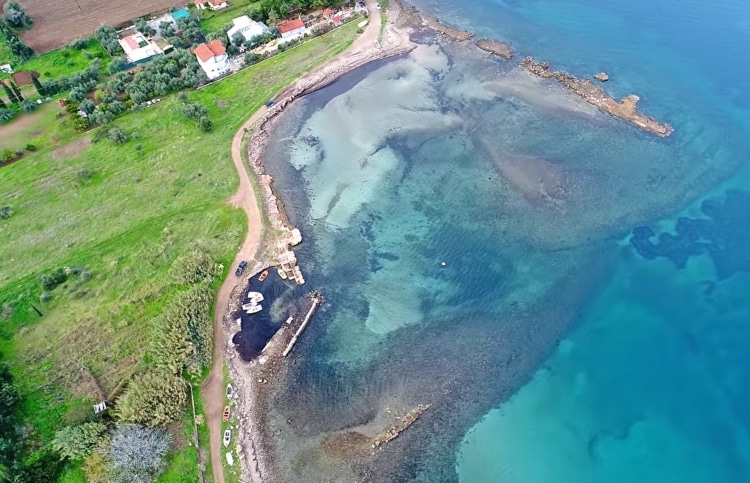
Excavations at the site of the ancient port have been carried out by Greeks, but also by German and American excavators.
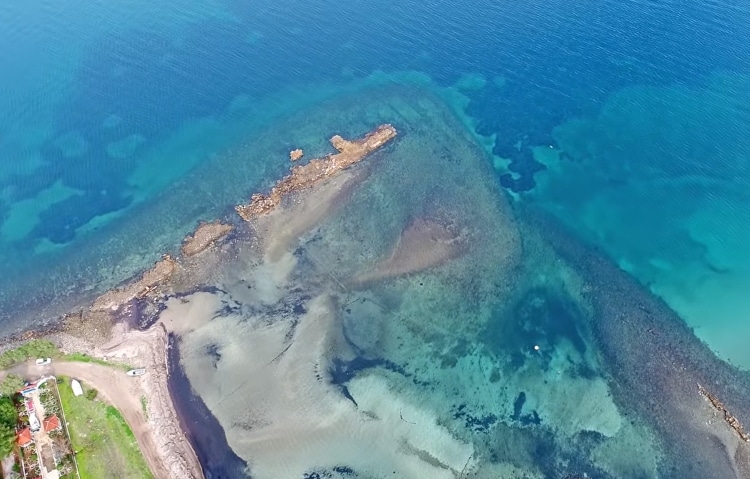
Photo source: Up Drones
Travel to Greece – Google News – Follow us
Quotes from Onassis that Left a Mark in History
Antiparos – The Greek island that was given as a dowry
Ancient Corinth: The richest city in the ancient world
Follow exploringgreece.tv on Instagram and Facebook
Frequently Asked Questions
Thebes is one of Europe's oldest cities located in Viotia, Greece. According to Greek mythology, it was founded by Cadmus, though Homer's epics credit its creation to the brothers Zethos and Amphion. Legend states that Amphion's magical lyre-playing caused stones to form the famous seven-gated walls of the city. Thebes played a significant role in ancient Greek history as a powerful city-state with its own port and naval fleet.
The Port of Ancient Anthedon is located near Thebes in Greece and is considered one of the best-preserved ancient ports in the country. It served as a crucial connection between Evia and Boeotia, featuring two jetties and a chain-sealed entrance for protection. The port was historically important for constructing triremes (ancient warships) and trading Phoenician purple dyes, remaining remarkably untouched by time compared to other submerged ancient ports.
During the Byzantine era, the Port of Anthidona experienced decline due to pirate invasions. Residents abandoned the coastal settlement and retreated inland to the northern slopes of Mount Messapio, now called Ktypas. They established a pastoral settlement that became the foundation of modern-day Loukisia, using construction materials from ancient structures to build the small church of Ag. Georgiou, which still stands outside the village today.
According to historical records, Thebes constructed 100 triremes (ancient warships) at the Port of Anthidona following a Theban decree. These ships were built under the direction of Epaminondas, a renowned Theban general who intended to use them to challenge Athenian dominance in ancient Greece.
Yes, the Port of Ancient Anthedon has been extensively excavated and researched. Archaeological work has been conducted by Greek excavators as well as international teams from Germany and America, helping to uncover and preserve the history of this remarkable ancient port site.


