• Ancient Greece
  • Religious Interest
  • Travel in Nature
  • Travel Cost Calculator
No Result
View All Result
Exploring Greece TV
  • HOME
  • ATHENS
  • ATTICA
    • East Attica
    • North Attica
    • South Attica
    • West Attica
    • beaches of Attica
    • Argosaronic Islands
  • GREECE
    • PELOPONNESE
    • WEST GREECE
    • CENTRAL GREECE
    • THESSALY
    • CENTRAL MACEDONIA
    • EAST MACEDONIA
    • THRACE
    • EPIRUS
    • IONIAN ISLANDS
    • AEGEAN ISLANDS
      • NORTH AEGEAN ISLANDS
      • SPORADES
      • CYCLADES
      • DODECANESE
    • CRETE
  • CYPRUS
  • MORE
    • Ancient Greece
    • Travel in Nature
    • Religious Interest
  • SO YOU KNOW
  • I AM GREEK
    • PEOPLE
  • Greek
Exploring Greece TV
  • HOME
  • ATHENS
  • ATTICA
    • East Attica
    • North Attica
    • South Attica
    • West Attica
    • beaches of Attica
    • Argosaronic Islands
  • GREECE
    • PELOPONNESE
    • WEST GREECE
    • CENTRAL GREECE
    • THESSALY
    • CENTRAL MACEDONIA
    • EAST MACEDONIA
    • THRACE
    • EPIRUS
    • IONIAN ISLANDS
    • AEGEAN ISLANDS
      • NORTH AEGEAN ISLANDS
      • SPORADES
      • CYCLADES
      • DODECANESE
    • CRETE
  • CYPRUS
  • MORE
    • Ancient Greece
    • Travel in Nature
    • Religious Interest
  • SO YOU KNOW
  • I AM GREEK
    • PEOPLE
  • Greek
No Result
View All Result
No Result
View All Result
Exploring Greece TV
  • Ancient Greece
  • Religious Interest
  • Travel in Nature
  • Travel Cost Calculator

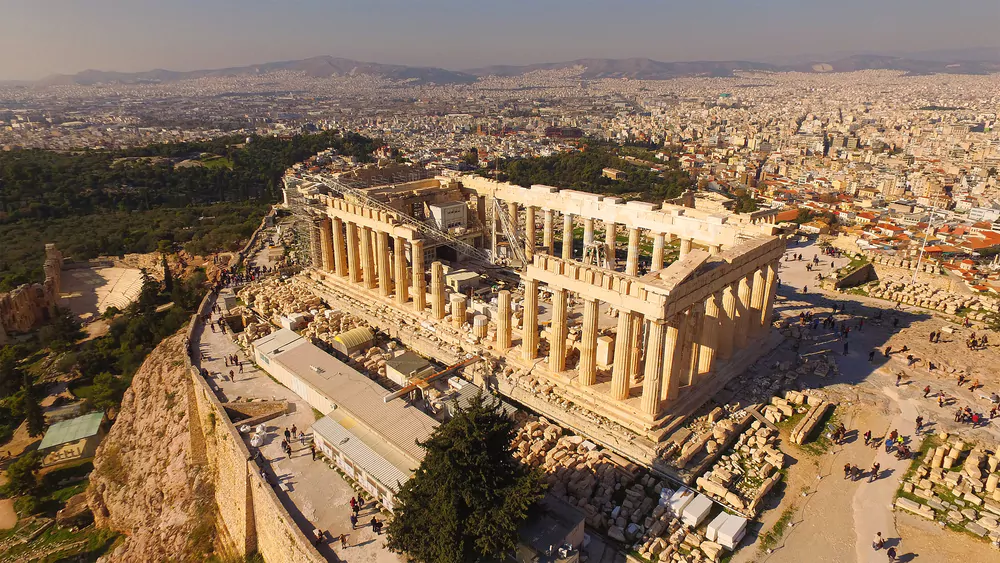
Parthenon: Five truths that many do not know

Interesting details about the great monument of antiquity

Exploring Greece TV by Exploring Greece TV
in Ancient Greece, ATHENS, Tourist in my own city, Old Athens
A A
Share on FacebookShare on Twittershare
—
—
—

It is the most brilliant monument of Athenian history that until today causes awe and admiration to Greek and foreign visitors. The Parthenon is not just an attraction of Greece but a monument that gathers on it the history of thousands of years. The history of Greece through the years, the art and philosophy of the country from antiquity to the present day. However, no matter how much we have heard and read about the Parthenon, there are some truths and facts that few people know. But this information also has its own interest and gives us a different perspective.

Here are five truths about the Parthenon that many don’t know…

1. The Blasting

In September 1687 the Parthenon suffered great destruction. It was the period when the campaign of the Venetian Francesco Morosini was underway. On September 16, a shell shook the gunpowder magazine of the fortress into the air. As a result, a large part of the temple collapsed on the east side.

2. No straight lines, only curves

In the Parthenon, there are no straight lines but curves that we cannot perceive. This is something that is attributed to its architectural construction. In practice, therefore, there is no straight line. On the contrary, there are small and imperceptible curves throughout the building. In fact, they are so subtle that they give the impression that, for example, its pillar is straight and completely flat. That is not the case.

3. Christian temple and mosque

The Parthenon had been converted into a Christian temple but also into a mosque, something that many had never heard of before. More specifically, it was in the 5th century when the Parthenon was converted into a Christian church. The Parthenon was dedicated first to Agia Sophia and then to the Virgin Mary. In the 17th century, the Parthenon was officially a mosque.

Παρθε4. Antiseismic construction

The construction of the Parthenon is absolutely earthquake-resistant. Experts have come to interesting conclusions about the construction of the Parthenon. According to them, the monument has been constructed in such a way as to allow it to expel rainwater but at the same time to have the required anti-seismic protection even for many richters.

5. The wooden roof

The original roof of the Parthenon was wooden and this is something that few people know. The columns, pediments, and entablature of the Parthenon may have been made of the well-known and famous marble, but this was not the case with its roof. In fact, the original roof of the building was made of wood. Experts and historians who have studied it report that this was the only way for its construction to work. This is because if they had built its roof out of marble, it would automatically create a lot of pressure on the columns. This would result in a great risk that the building would collapse.

Travel to Greece – Google News – Follow us

Holidays in Hydra: The beautiful beaches in the diamond of the Argosaronic Gulf

Rhodes: The historic and impressive Acropolis of Lindos

There was once this big tower on the Acropolis

Follow exploringgreece.tv on  Instagram and Facebook


Frequently Asked Questions

In September 1687, the Parthenon suffered major destruction during a Venetian campaign led by Francesco Morosini. On September 16, a shell ignited the gunpowder magazine of the fortress, causing a large portion of the temple to collapse on the east side.

No, the Parthenon contains no straight lines. Instead, it features subtle, imperceptible curves throughout the entire building. These curves are so subtle that they create the visual illusion of straight pillars and flat surfaces, but this architectural technique was intentional in its design.

Yes, the Parthenon was converted into a Christian church in the 5th century, where it was dedicated first to Agia Sophia and then to the Virgin Mary. In the 17th century, it was officially converted into a mosque.

Yes, the Parthenon is constructed to be earthquake-resistant. Experts have determined that the monument was built with anti-seismic protection capable of withstanding significant earthquakes. The construction also allows for proper rainwater drainage while maintaining structural stability.

The original Parthenon roof was made of wood, not marble. Although the columns, pediments, and entablature were constructed from marble, historians and experts explain that a wooden roof was necessary because a marble roof would have created excessive pressure on the columns, risking the building's collapse.

Tags: acropolisParthenonhistory of Athens
ShareTweetShare

Related Posts

Ancient Greece

Athens: where the ancients shed tears and why

ATTICA

Two areas of Attica with strange names.

ATTICA

The watermill that is 30 minutes away from Syntagma Square.

ATHENS

Which big hospital of Athens used to be a pasture

Ancient Greece

Why Thiseion is the wrong name for this district of Athens

Ancient Greece

There was once this big tower on the Acropolis

ATHENS

The columns of Olympian Zeus Columns: why it took years to solve the mystery

Ιστορικό ντοκουμέντο από την Ακρόπολη: Η παλιότερη φωτογραφία της που τραβήχτηκε το 1842
ATHENS

Acropolis: The oldest photograph was taken over 180 years ago

Facebook Youtube Twitter Youtube Vimeo Instagram

our Webisites

ExploringGreece.tv

  • About ExploringGreece.tv
  • Data Protection Policy
  • Terms of Use
  • Website ID information
  • Contact us

See Also

  • Ancient Greece
  • Religious Interest
  • Travel in Nature
  • Travel Cost Calculator

Copyright © 2017-2026 Viewmax Media.

  • HOME
  • ATHENS
  • ATTICA
    • East Attica
    • North Attica
    • South Attica
    • West Attica
    • beaches of Attica
    • Argosaronic Islands
  • GREECE
    • PELOPONNESE
    • WEST GREECE
    • CENTRAL GREECE
    • THESSALY
    • CENTRAL MACEDONIA
    • EAST MACEDONIA
    • THRACE
    • EPIRUS
    • IONIAN ISLANDS
    • AEGEAN ISLANDS
      • NORTH AEGEAN ISLANDS
      • SPORADES
      • CYCLADES
      • DODECANESE
    • CRETE
  • CYPRUS
  • MORE
    • Ancient Greece
    • Travel in Nature
    • Religious Interest
  • SO YOU KNOW
  • I AM GREEK
    • PEOPLE
  • Greek
No Result
View All Result
  • en English
  • el Ελληνικα

Copyright © 2017-2026 Viewmax Media.

  • HOME
  • ATHENS
  • ATTICA
    • East Attica
    • North Attica
    • South Attica
    • West Attica
    • beaches of Attica
    • Argosaronic Islands
  • GREECE
    • PELOPONNESE
    • WEST GREECE
    • CENTRAL GREECE
    • THESSALY
    • CENTRAL MACEDONIA
    • EAST MACEDONIA
    • THRACE
    • EPIRUS
    • IONIAN ISLANDS
    • AEGEAN ISLANDS
      • NORTH AEGEAN ISLANDS
      • SPORADES
      • CYCLADES
      • DODECANESE
    • CRETE
  • CYPRUS
  • MORE
    • Ancient Greece
    • Travel in Nature
    • Religious Interest
  • SO YOU KNOW
  • I AM GREEK
    • PEOPLE
  • Greek
No Result
View All Result
  • en English
  • el Ελληνικα

Copyright © 2017-2026 Viewmax Media.

Newsletter

  • Greek