


If you love vinyl, old versions of books and antiques, then you definitely know Abyssinias Square very well. The most vintage corner in Athens is a popular destination for those nostalgic of older times. Abyssinias Square is one of the most famous squares of the historic center of Athens. It is located a few meters below Monastiraki Square, between Ermou,Hephaestos street and Agios Filippos streets.
The name of the square and its history
Abyssinias Square was formed in 1860. Its name comes from the ancient name of Ethiopia, which is Abyssinia, probably because of the people from Ethiopia who used to live in this region. Many scholars argue that the name was born in 1922, when Ethiopia’s aid to refugees from Asia Minor was given at this place. During the years, it became quite popular, becoming one of the most distinctive squares of Athens today and especially in the historical center.
The Yusurum (bazaar) of Athens and its evolution
In 1910, the second-hand items and commodities bazaar was moved to Abyssinia Square, which until then took place in the Auction House square. The Athenians used to give alternastive names to the regions. Thus, until 1875 the area was also called “Manganaria”. This is due to the roads that were at the side of Ermou street, were the “magganarides”, i.e. the silk workers, gathered. The most diachronic name of the square, however, is “Yusurum”(the Bazaar) and is used to this day.
A special feature of the square is that it is a point where religions and cultures meet and coexist for years. The ancient Greek market, Hadrian’s Roman library, the mosque of Tsisdarakis, the Church of Panagia Pantanassa and the Jewish presence (the name “Yusurum” is Jewish), give the region a powerful amakgam of multiculturalism.
Abyssinias Square today
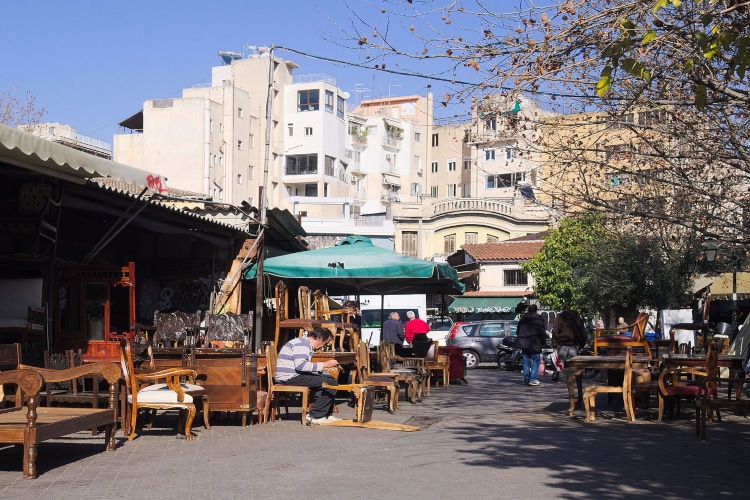
Photo by C messier – CC BY-SA 4.0
Today it is definitely the most retro-styled place of Athens. There you can find stalls with old books, toys, dishes, watches, personal items and other odds and ends. Everything your mind can imagine from days passed. You may see things that will remind you of your childhood. Even if you’re not a collector or an antiques fan, you can find something that will pique your interest in taking it home with you.
This corner of Athens is of course the joy of the collector, since you can find old cameras, analog phones and typewriters. The prices on these pieces are higher, but you can always have a bargain and get a lower price.
Take a walk in Athens and Abyssinias Square and at the same time a journey through time…
External photography source: athensattica.com
Which was The Agamon Square of Athens and why it was called so
Frequently Asked Questions
Abyssinias Square is one of Athens' most famous historic squares, known as the city's most vintage and old-fashioned neighborhood. It is located in the historic center of Athens, just a few meters below Monastiraki Square, between Ermou, Hephaestos street, and Agios Filippos streets.
Abyssinias Square was formed in 1860 and its name comes from Abyssinia, the ancient name of Ethiopia. The name likely originates from Ethiopian people who lived in the region, though some scholars argue it was named in 1922 when Ethiopia provided aid to Asia Minor refugees at this location.
Today, Abyssinias Square is Athens' most retro-styled marketplace where you can find vintage items including old books, antique toys, dishes, watches, vintage cameras, analog phones, typewriters, and various collectible odds and ends. It's a paradise for antique collectors and those nostalgic for older times.
The second-hand bazaar moved to Abyssinias Square in 1910, previously operating at the Auction House square. The square has been known by several names throughout history, including 'Manganaria' (until 1875, named after the silk workers), and 'Yusurum' (meaning bazaar), which is still used today.
Abyssinias Square is a unique meeting point of religions and cultures where ancient Greek markets, Hadrian's Roman library, the Tsisdarakis mosque, the Church of Panagia Pantanassa, and Jewish heritage coexist. This multiculturalism is reflected in the square's name 'Yusurum,' which has Jewish origins, and its diverse historical landmarks.


