


Athens, brimming with remarkable attractions, is steeped in rich history, myths, and enigmatic tales. Among these, the Temple of Olympian Zeus stands out. This renowned landmark has been shrouded in mystery for years. Intriguingly, a single photograph sparked the enigma surrounding this popular site, which boasts its own illustrious past.
The imposing buildings of Ernst Ziller in Athens
Temple of Olympian Zeus: The great history of the monument of Athens
To begin with, the sanctuary of Olympian Zeus housed one of the grandest temples of the ancient world, dedicated to Zeus. This sanctuary was a renowned example of marble architecture. Its foundation traces back to the mythical Deucalion. Unfortunately, we don’t have a complete image of the temple from that era, only the remnants of the colossal structure. Today, the Temple of Olympian Zeus is essentially the ruins of the original temple, also known as the Olympieion.
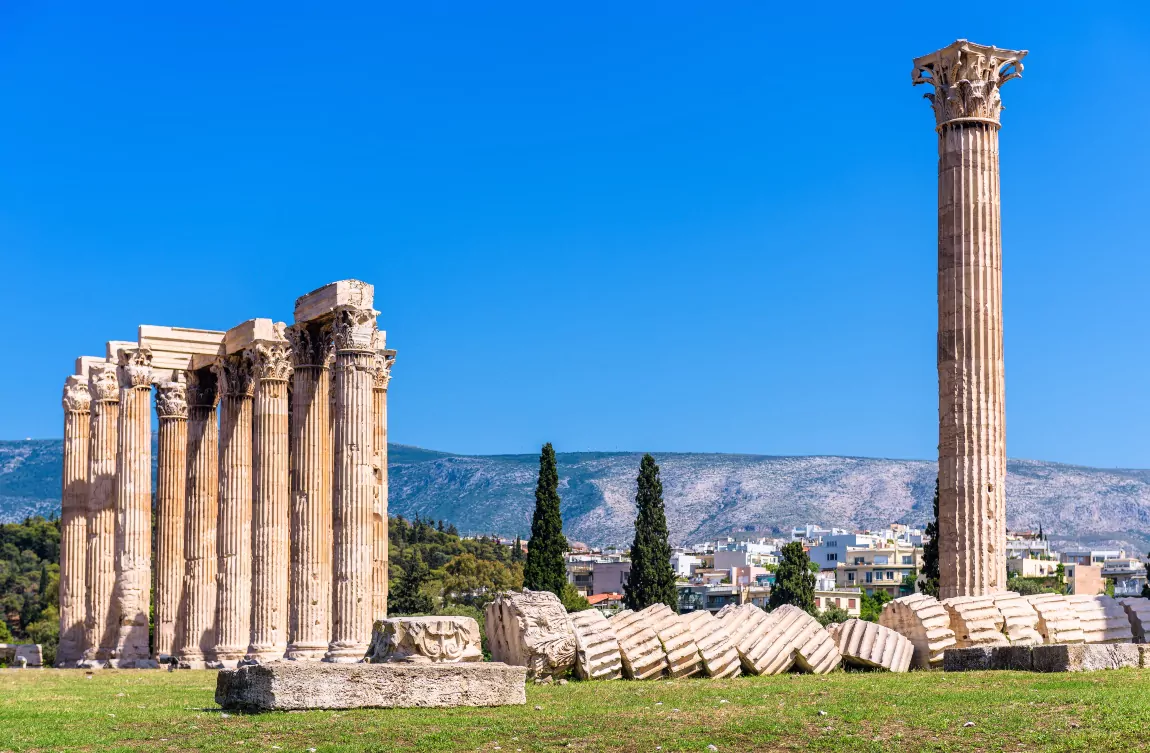
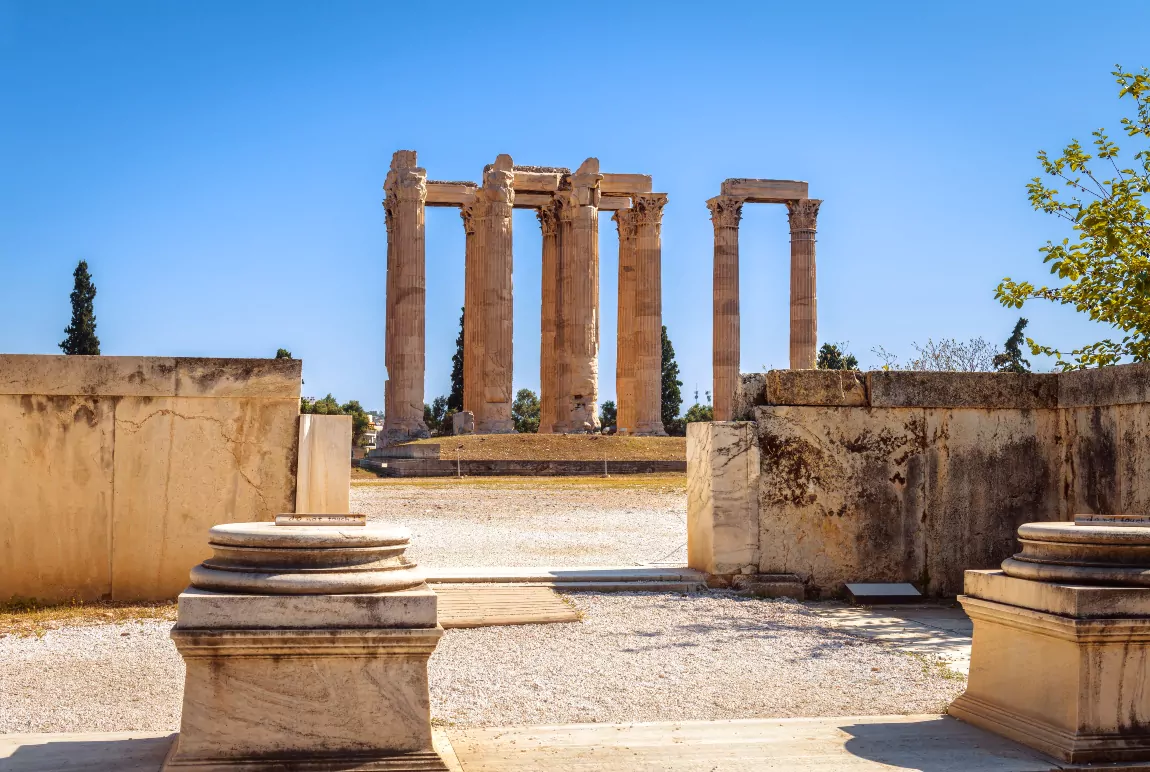
A mere 500 meters from Syntagma Square lie the remnants of the grandest temple of ancient Greece. In the Roman era, it was the largest temple in Greece, housing one of the most massive cult statues of the ancient world. However, the temple’s magnificent glory was short-lived. It was plundered during a Cheroulia invasion in the 3rd century AD. Since then, it has been abandoned, never restored, and gradually deteriorated into ruins. Today, it stands as one of Athens’ most significant landmarks, albeit in a state of decay.
The long-unsolved mystery
So, what is the enduring enigma associated with the Temple of Olympian Zeus, and how was it eventually solved? The image we see today of the Pillars is quite distinctive. However, a photograph, over 160 years old, sparked a mystery that required extensive research to unravel. This is why it has been considered a mystery for so long. The answer emerged in 2017 when a British writer and researcher, Paul M.M.M Cooper, conducted his investigation and made a simultaneous revelation.
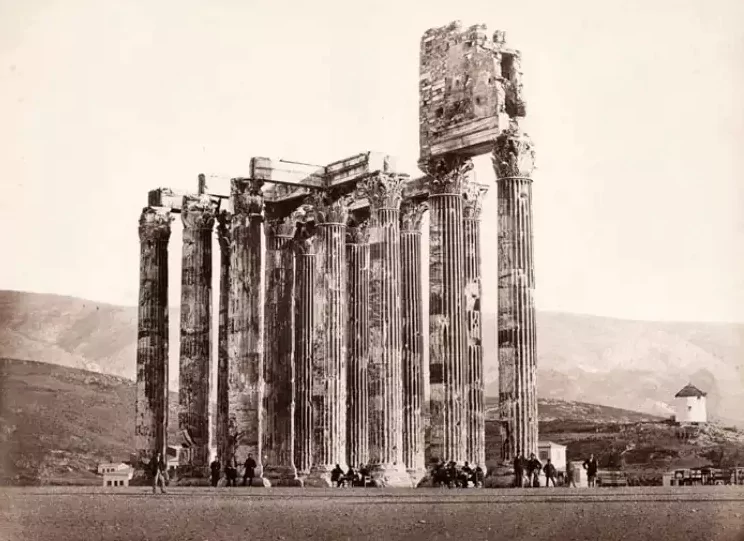
An 1858 photograph reveals an unusual appendage at the top of the remaining structure of the Temple of Olympian Zeus. This appendage appears to be a small room, a peculiar and mysterious construction unrelated to the temple’s original, unfinished design. The mystery was soon solved when a British researcher discovered an 1833 painting by Johann Michael Wittmer, which also featured this addition. It was eventually revealed that this construction was the work of the Stylites, ascetics known for living atop high structures to feel closer to God.
The researcher explained, “Christian ascetics, known as Stylites or ‘saints of the pillars,’ believed that living on top of tall pillars brought them closer to God. This practice also induced sacred physical debilitation, serving as atonement for their sins.” Thus, the long-standing mystery was finally resolved.
Travel to Greece – Google News – Follow us
Old Athens: Pictures of Patision Avenue from another era
Shock, horror — the nude statues in old Athens
Frequently Asked Questions
The Temple of Olympian Zeus, also known as the Olympieion, is one of the grandest temples of the ancient world dedicated to Zeus. Located just 500 meters from Syntagma Square in Athens, it housed one of the most massive cult statues in antiquity. Today, it stands as ruins of the original marble structure, representing one of Athens' most significant historical landmarks.
The Temple of Olympian Zeus was plundered during a Cheroulia invasion in the 3rd century AD. Following this attack, the temple was abandoned and never restored, gradually deteriorating into the ruins visible today. Despite its magnificent past as the largest temple in Greece during the Roman era, it has remained in a state of decay for nearly two thousand years.
The mystery involved a small room-like appendage visible at the top of the temple's remaining pillars in a photograph taken in 1858. This mysterious construction seemed unrelated to the temple's original design. The enigma remained unsolved for over 160 years until British researcher Paul M.M.M Cooper solved it in 2017.
The mysterious construction was built by Christian ascetics known as Stylites or 'saints of the pillars.' These religious monks believed that living atop tall pillars brought them closer to God and served as a form of atonement for their sins through physical hardship and spiritual isolation.
The mystery was solved in 2017 when British researcher Paul M.M.M Cooper discovered an 1833 painting by Johann Michael Wittmer that also featured the mysterious appendage. This painting provided the key to understanding that the small room on top of the pillars was constructed by Stylite monks as a dwelling place for their ascetic practices.


