
• Ancient Greece
  • Religious Interest
  • Travel in Nature
  • Travel Cost Calculator
No Result
View All Result
Exploring Greece TV
  • HOME
  • ATHENS
  • ATTICA
    • East Attica
    • North Attica
    • South Attica
    • West Attica
    • beaches of Attica
    • Argosaronic Islands
  • GREECE
    • PELOPONNESE
    • WEST GREECE
    • CENTRAL GREECE
    • THESSALY
    • CENTRAL MACEDONIA
    • EAST MACEDONIA
    • THRACE
    • EPIRUS
    • IONIAN ISLANDS
    • AEGEAN ISLANDS
      • NORTH AEGEAN ISLANDS
      • SPORADES
      • CYCLADES
      • DODECANESE
    • CRETE
  • CYPRUS
  • MORE
    • Ancient Greece
    • Travel in Nature
    • Religious Interest
  • SO YOU KNOW
  • Greek
Exploring Greece TV
  • HOME
  • ATHENS
  • ATTICA
    • East Attica
    • North Attica
    • South Attica
    • West Attica
    • beaches of Attica
    • Argosaronic Islands
  • GREECE
    • PELOPONNESE
    • WEST GREECE
    • CENTRAL GREECE
    • THESSALY
    • CENTRAL MACEDONIA
    • EAST MACEDONIA
    • THRACE
    • EPIRUS
    • IONIAN ISLANDS
    • AEGEAN ISLANDS
      • NORTH AEGEAN ISLANDS
      • SPORADES
      • CYCLADES
      • DODECANESE
    • CRETE
  • CYPRUS
  • MORE
    • Ancient Greece
    • Travel in Nature
    • Religious Interest
  • SO YOU KNOW
  • Greek
No Result
View All Result
No Result
View All Result
Exploring Greece TV
  • Ancient Greece
  • Religious Interest
  • Travel in Nature
  • Travel Cost Calculator
Who is the wall

What is the wall “Dema” in Attica that looked like an Incas fortress

An unknown fort for most people,a breath away from the center of Athens

Exploring Greece TV by Exploring Greece TV
in Ancient Greece, ATTICA, West Attica
A A
Share on FacebookShare on Twittershare

Athens and Attica in general, hide dozens of secrets that are revealed over the years and they are of great importance. One such unknown monument in
the wall “Dema”
which is considered to have looked in the past like an Incas fortress.

Calculate the cost to reach this destination

The wall “Dema” in Attica and its history

The ancient <dema> wall is an ancient wall that has an area of about 4.5 km. It can be seen from above between Mount Aigaleo and Parnitha. It is a monument that has concerned archaeologists about its usefulness and its dating. On the basis, however, of its stonework and ceramics, it is estimated that it was built in the years of the Boeotic War from 378 to 377 BC.

But why was it called that? According to the archaeologist Stirlingdau it was one of the most amazing and mysterious monuments of Greek antiquity. It looked like the Incas stronghold in Sashuhuaman, Peru. It was called “Dema” because it was the connection of the southwest side of Parnitha with the Aigaleo mountain range. It essentially “tied” one area with the other. The wall appears to have had six square towers and a circular one that survives to this day on Pyrgathi hill.

To the east of the “dema” are preserved the ruins of a second more robust wall called the “back Wall” [piso tichos], which is 200 meters long while it is located in the plains of Ano Liosia. It seems that the reason for its existence was on the one hand the repulsion of a major main attack but also the counterattack. Archaeologist Mark H. Munn, in his book “The Defense of Attica – The Dema Wall and the Boiotian War of 378-375 B.C”, wrote in the foreword: “The countryside of Attica is generously scattered with ancient defense works and fortifications, including individual towers and observatories, rubble enclosures, a dam wall (the DEMA wall), and several important forts.”
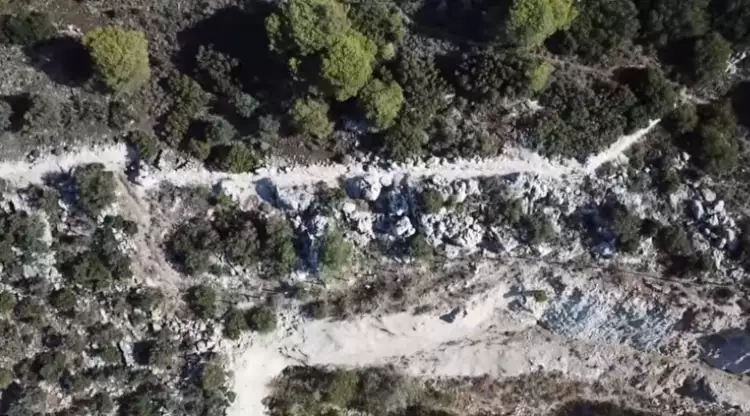
According to Thucydides, in the area where the wall is located, the Spartans camped in the first year of the Peloponnesian War, destroying the countryside of Attica.

External photography source and info:

\n


Read Also:

  • There was once this big tower on the Acropolis
  • Attica: Four ideas for an autumn one-day trip close to Athens
  • Attica: a trip to Lake Beletsi

Follow us on Facebook, Instagram and Google News.

Frequently Asked Questions

The Dema wall is an ancient 4.5 km long fortification in Attica, Greece, located between Mount Aigaleo and Parnitha. It is famous for its striking resemblance to Incan fortress architecture, particularly the Sacsayhuamán fortress in Peru. Built during the Boeotic War (378-377 BC), the wall features six square towers and one circular tower, and is considered one of the most remarkable and mysterious monuments of Greek antiquity.

The Dema wall was built during the Boeotic War between 378-377 BC, as determined by archaeological analysis of its stonework and ceramics. Its primary purpose was to defend Attica by connecting the southwest side of Parnitha mountain with the Aigaleo mountain range, essentially creating a defensive barrier across a strategic passage.

The wall is called 'Dema' because it served as a connection point between two major geographical features - the southwest side of Parnitha mountain and the Aigaleo mountain range. The name reflects how the wall 'tied' these two areas together, creating a unified defensive structure across the landscape.

The 'back wall' (piso tichos) is a second, more robust fortification located 200 meters east of the Dema wall in the plains of Ano Liosia. This 200-meter-long wall served dual defensive purposes: repelling major attacks and enabling counterattacks. It worked in conjunction with the main Dema wall to provide layered defense for Attica.

According to archaeologist Stirlingdau, the Dema wall is remarkably similar in appearance to the Incan stronghold of Sacsayhuamán in Peru. Both structures feature impressive stonework and fortress-like architecture, though the Dema wall predates the Incan civilization by over 1,800 years, making this architectural similarity one of the most intriguing aspects of the monument.

Tags: AegaleoAncient GreeceΠΑΡΝΗΘΑ
ShareTweetShare

Related Posts

ATTICA

Attica: an excursion to Dervenohoria

Nafplio one-day excursions near Athens
Exploring Attica

Attica: Four ideas for an autumn one-day trip close to Athens

Ancient Greece

Why Thiseion is the wrong name for this district of Athens

The impressive cave in Attica discovered by two students1
ATTICA

The impressive cave in Attica discovered by two students

OLYMPUS DIGITAL CAMERA
ATTICA

Attica: Caesariani Monastery, one of the most beautiful byzantine temple

ATTICA

Attica: a trip to Lake Beletsi

ATTICA

A winter day on Mount Parnitha: the walk you must take

ATTICA

Attica: the Flambouri shelter on Mount Parnitha

Facebook Youtube Twitter Youtube Vimeo Instagram

our Webisites

ExploringGreece.tv

  • About ExploringGreece.tv
  • Data Protection Policy
  • Terms of Use
  • Website ID information
  • Contact us

See Also

  • Ancient Greece
  • Religious Interest
  • Travel in Nature
  • Travel Cost Calculator

Copyright © 2017-2025 Viewmax Media.

  • HOME
  • ATHENS
  • ATTICA
    • East Attica
    • North Attica
    • South Attica
    • West Attica
    • beaches of Attica
    • Argosaronic Islands
  • GREECE
    • PELOPONNESE
    • WEST GREECE
    • CENTRAL GREECE
    • THESSALY
    • CENTRAL MACEDONIA
    • EAST MACEDONIA
    • THRACE
    • EPIRUS
    • IONIAN ISLANDS
    • AEGEAN ISLANDS
      • NORTH AEGEAN ISLANDS
      • SPORADES
      • CYCLADES
      • DODECANESE
    • CRETE
  • CYPRUS
  • MORE
    • Ancient Greece
    • Travel in Nature
    • Religious Interest
  • SO YOU KNOW
  • Greek
No Result
View All Result
  • en English
  • el Ελληνικα

Copyright © 2017-2025 Viewmax Media.

Trip Cost Calculator

Fill in the fields and click Calculate

From:
Origin
To:
Destination

Powered by ExploringGreece.tv
  • HOME
  • ATHENS
  • ATTICA
    • East Attica
    • North Attica
    • South Attica
    • West Attica
    • beaches of Attica
    • Argosaronic Islands
  • GREECE
    • PELOPONNESE
    • WEST GREECE
    • CENTRAL GREECE
    • THESSALY
    • CENTRAL MACEDONIA
    • EAST MACEDONIA
    • THRACE
    • EPIRUS
    • IONIAN ISLANDS
    • AEGEAN ISLANDS
      • NORTH AEGEAN ISLANDS
      • SPORADES
      • CYCLADES
      • DODECANESE
    • CRETE
  • CYPRUS
  • MORE
    • Ancient Greece
    • Travel in Nature
    • Religious Interest
  • SO YOU KNOW
  • Greek
No Result
View All Result
  • en English
  • el Ελληνικα

Copyright © 2017-2025 Viewmax Media.

Newsletter

  • Greek