


Athens and Attica in general is full of history. In every one of its corners something more or less known has taken place. It is of no coincidence that many neighborhoods have been named after something characteristic that happened there, or by the name of a man or even by an attraction located in the area. This is also the case with a very well-known area in Attica which took its name from the monastery located there. We are speaking about the Kaisariani district.
The monastery in Kaisariani distrtict and its history
The medieval church on the western slope of Ymittos Mountain is very representative of its time and most Athenians know of it. Let’s go now to the area that is just above the monastery. It was once dedicated to the goddess Aphrodite and was called “Killou Pira” (meaning “The Sack of the Lame man”) From this came the name “Kalopoula”. as a paraphrase In this enchanting and calm green environment in the forest, the famous monastery is built.
The monastery is believed to have been founded during the Byzantine period sometime in the year 1100, which is the date of construction of the preserved church. However, the place has a longer history as a place of worship, as we said previously. In addition, research by archaeologists showed that parts of the catholic are located in the west, near a smaller church which was built between the 10th and 11th centuries.
For the origin of its name we have different stories. Some sources attribute it to an abbot called Kaisarios, who is said to be the founder of the monastery. Others associate it with the image of the Virgin Mary. The image had been transferred from Caesarea or with the help of a Caesar who renovated the church during the Byzantine period. Some also refer to Syriani, the daughter of the king of Eleusis Keleus. It is said that in the area there was a temple where ceremonies like the Eleusinian Mysteries took place, and which were called Saisaria.
When entering, one will admire the unique frescoes dated around 1700. They are modelled on the Cretan paintings and the Mount Athos technique.
A beautiful area in Attica
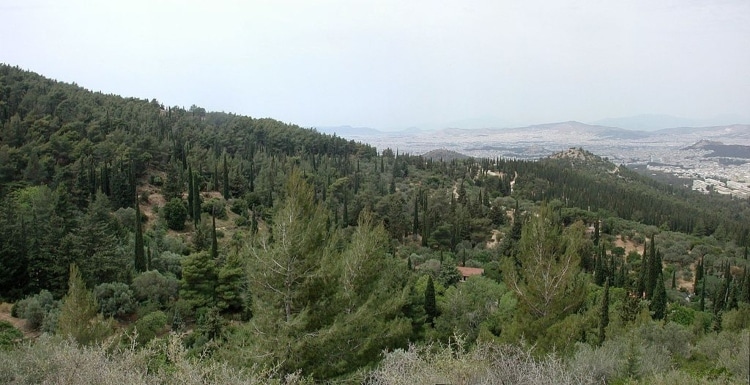
So this monastery, which stopped operating in 1833, gave its name to the entire area that surrounds it. Few know this is the case as many people think the area gave its name to the monastery. Kaisariani district is an area that has the privilege of the beautiful forest of Ymittos Mountain. This forest is available the whole year round for walks that give the opportunity of contact with nature.
The monastery in Kaisariani district is a place in Attica, that is very close to the center of Athens and it generously gives us peace and tranquility whenever we need it. A treasure next to us.
External photography source: C messier
Frequently Asked Questions
The Kaisariani monastery is a medieval church located on the western slope of Ymittos Mountain in the Kaisariani district of Attica, near Athens. It is believed to have been founded during the Byzantine period around 1100 and is known for its representative architectural style and unique frescoes dated around 1700.
The Kaisariani district took its name from the famous monastery located in the area. The monastery's name has several possible origins: it may come from an abbot called Kaisarios who founded it, from the image of the Virgin Mary transferred from Caesarea, or from Syriani, the daughter of the king of Eleusis Keleus, associated with ancient Eleusinian Mysteries ceremonies.
The preserved church of Kaisariani monastery was constructed around 1100 during the Byzantine period. However, archaeological research shows that a smaller church was built in the same area between the 10th and 11th centuries. The monastery stopped operating in 1833.
Visitors can admire unique frescoes dated around 1700 inside the Kaisariani monastery. These frescoes are modelled on Cretan paintings and use the Mount Athos technique, representing important Byzantine artistic traditions.
Yes, the Kaisariani district is an excellent area for outdoor activities. It has the privilege of being surrounded by the beautiful forest of Ymittos Mountain, which is available year-round for walks and nature contact. The monastery and its wooded surroundings offer peace and tranquility close to the center of Athens.


