


In the many‑faced tradition of Greek mythology, Protesilaus stands out for one extraordinary reason. He was the first Greek to be killed in the Trojan War. His death was bound to an oracle — a prophecy foretelling that the first man to set foot on the shores of Troy would also be the first to die. Protesilaus was a Thessalian hero, the firstborn son of Iphiclus and Astyoche, and brother of Podarces. As one of the suitors of Helen, he joined the expedition against Troy, commanding forty ships and warriors from Phylace, Antron, Pyrasos, and Pteleon.
When the Greek fleet reached the Trojan coast, the campaign had not yet truly begun — and already the fate of one of its most important warriors had been sealed. The oracle was explicit: the first Greek to disembark would be the first to fall.
According to tradition, Protesilaus knew exactly what awaited him. Even so, he was the one who leapt first from his ship. He did not evade the prophecy — he confronted it, fully aware of the cost. Moments later, he fell dead by the hand of Hector, Troy’s greatest champion.
This tradition also explains his name. Later versions of the myth say that his original name was Iolaus, and that he was renamed Protesilaus because of his willingness to be the first to set foot on enemy soil. His name thus became forever linked with the first Greek loss of the Trojan War.
Protesilaus, however, is not a hero confined to a single episode. Other traditions say he took part in the first Greek expedition to Mysia. Before departing for Troy, he married Laodamia; while in “the Cypria chronicles”, his wife is named Polydora, daughter of Meleager.
But the story of Protesilaus does not end on the shores of Troy. His death gave rise to one of the most dramatic myths connected to the Trojan War. According to tradition, the gods pitied Laodamia for the loss of her husband and decided to allow her to see him once more.
Protesilaus returned briefly from the Underworld and appeared before her. Laodamia initially believed her husband had returned from Troy alive. But her joy was short‑lived. When the gods led him back to the Underworld, the loss became final — and she sank into despair.
According to the myth, Laodamia asked for a bronze statue of Protesilaus to be made and devoted herself to it, as if she could keep his presence alive through it. Her father, alarmed by her behavior, ordered the statue destroyed. Laodamia could not endure this second separation. She threw herself into the fire and died alongside the statue.
The figure of Protesilaus entered Homeric tradition as well. He is mentioned in two books of the Iliad — Book II and Book XIII — and his memory endured for centuries through his heroic cult.
From Myth to the History of Troy
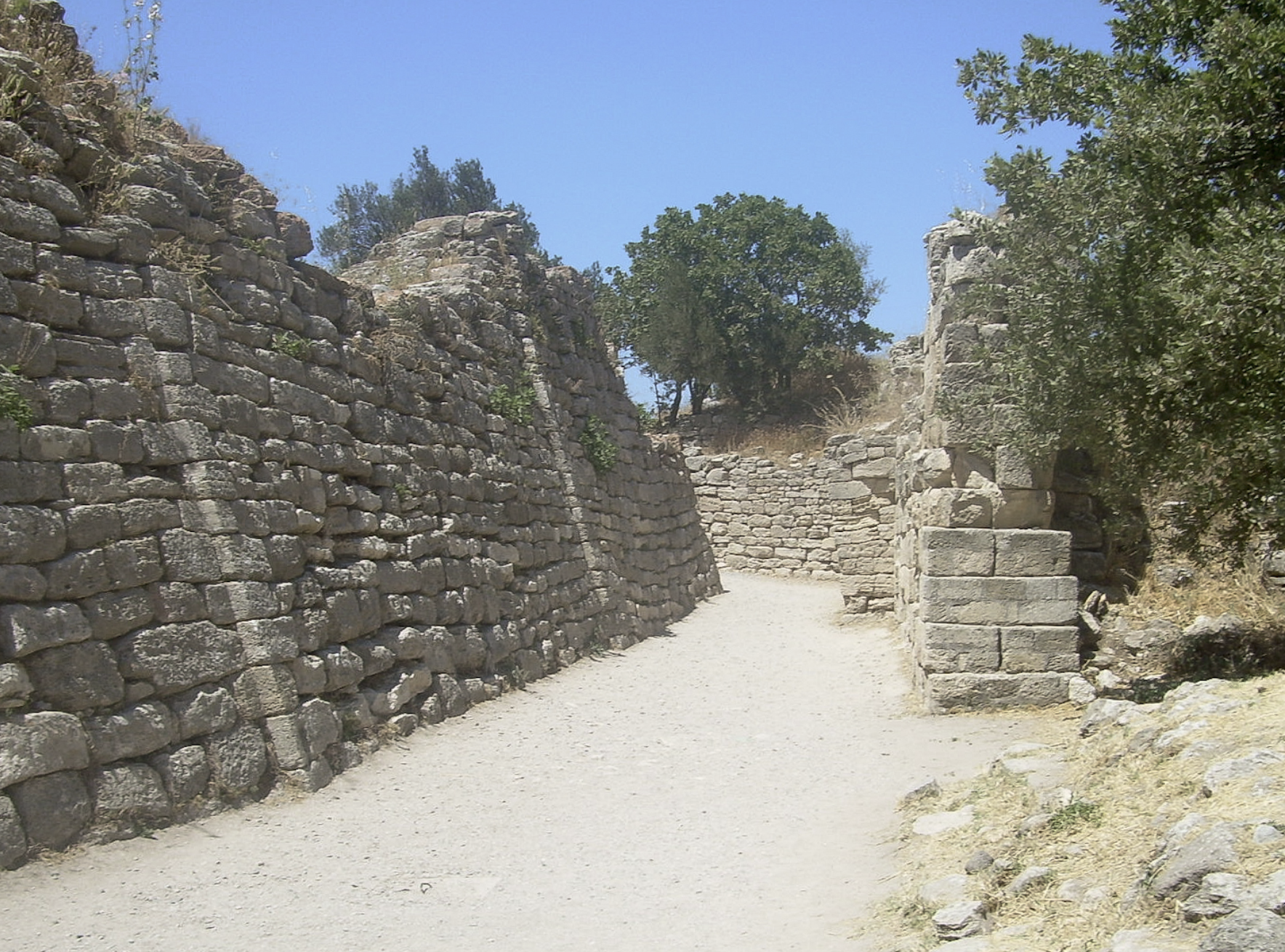
The memory of Protesilaus became inseparable from a single place: Troy. And here lies one of the most fascinating aspects of the story. The city that dominates the Iliad is no longer a lost world known only through Homer’s verses. Its location has been identified, excavated, and studied for more than a century.
Ancient Troy — Ilion — lies in northwestern Asia Minor, in modern‑day Turkey, near the Dardanelles, southwest of the ancient Phrygian Mount Ida. The archaeological site sits in the region of the Troad, and today stands as one of the most important historical landscapes connected to Homer’s world.
The identification of this site with Homeric Troy emerged gradually, shaped largely by the excavations of the German archaeologist Heinrich Schliemann, who began his work there in the 1870s. His excavations revealed not one city, but multiple successive cities, each built atop the ruins of the previous — a stratified monument of centuries.
This layered image is crucial for understanding Troy. The archaeological site does not correspond to a single city that remained unchanged for ages. Instead, it represents a settlement with a long, complex history, where different phases of habitation followed one another. Among the most significant is Troy VIIa, proposed by many scholars as the most likely candidate for the city associated with Homeric tradition.
In the centuries that followed, the region was never entirely abandoned. During the Roman period, under Emperor Octavian Augustus, a new city — Ilium — was founded at the site believed to be the location of mythical Ilion. The city flourished and retained its importance well into the Byzantine era, when it gradually began to decline.
Even then, the connection between the region and Troy remained alive. The site continued to serve as a point of reference for ancient tradition, and later for archaeologists and travelers seeking the traces of Homer’s city.
Troy Before and After Homer
The history of the Trojans lies at a crossroads where myth and archaeology meet. In Greek mythology, the Trojans were the inhabitants of Troy, a powerful city in the region of the Troad in Asia Minor. The city is portrayed as wealthy and influential, a crucial node in the trade networks that connected East and West.
Tradition attributes to the Trojans great wealth, advanced craftsmanship, luxurious garments, and a distinctive expertise in ironworking. Above all, however, Troy was renowned for its imposing walls — the very walls that, in Homer’s narrative, became the great obstacle the Achaeans had to overcome during their long siege.
Homer’s Iliad, the epic named after Ilion, does not recount the entire Trojan War. It focuses on a specific segment of the siege, centered primarily on the wrath of Achilles. Yet through its verses, the entire world of Troy emerges: its warriors, its kings, its gods, its walls, its battles, and the two opposing sides locked in conflict.
The epic is usually dated to the 8th or 9th century BCE, though it incorporates much older oral material. For this reason, the Troy of the Iliad cannot be treated merely as a historical record. It is the product of a long tradition in which real places and possible historical memories coexist with myth and heroic storytelling.
Where the Achaeans Camped

To understand more clearly the landscape Homer describes, one must also look beyond the city walls. In the Iliad, the Greek fleet arrives at the shore, and the Achaeans establish their camp near the mouth of the river Scamander, corresponding to today’s Karamenderes.
Troy stood on a hill above the Scamander plain, from where the Trojans could oversee the entire surrounding region. The plain became the stage for the clashes between Achaeans and Trojans, and it is precisely this geography that gives Homer’s narrative a concrete, recognizable landscape.
The modern landscape, however, is not identical to what the warriors of the age described by tradition would have seen. The coastline has shifted dramatically over the centuries due to sediment deposits. The ancient mouth of the Scamander lay roughly five kilometers inland from today’s shore, while the site of ancient Troy now stands about fifteen kilometers from the sea.
Thus, a visitor standing at the archaeological site today sees a landscape quite different from the one described in the Iliad. The rivers, the coastline, and the plain have changed — yet the fundamental geographic core remains recognizable.
And somewhere along this shore, according to ancient tradition, a Thessalian hero took the first step. Protesilaus, knowing the oracle condemned him, was the first to leap from his ship. He fell dead before the great conflict had even begun, and his name became forever linked with the first Greek loss before the walls of Troy.
Thousands of years later, the city that formed the backdrop of this story still stands — not as Homer described it, but as a complex archaeological landscape preserving the traces of many different eras. If the myth of Protesilaus belongs to the world of heroes, the ruins of Troy are the material imprint of a real place that lived many lives, many cities, and many historical periods before reaching its present form.


