


More or less we all know that the image of Athens today does not resemble that of the ancient times. The sights and monuments still remain reminiscent of the old glamour and image that Athens once had. As well as the rivers she had. Even next to the Acropolis. Such a river was the Iridanos. It is, in fact, the first buried river in Athens.
Iridanos, the buried river of Athens and its history
Iridanos, was a river of Ancient Athens,specifically a tributary of Ilissos. It had its springs in Lycabettos hill and crossed the ancient city of Athens going in essence from the east to the west. And it may have been one of the first rivers in Athens but its luck was not good. Interventions due to human needs wiped him out under constructions that were made over it. Today, if you are interested and want to search for it, you will find only the bed of the river, two meters wide, in the archaeological site of Kerameikos.
The damaged river next to the Acropolis
The Iridanos River is definitely the most damaged river in Athens. Most people know the suffering that Kifissos and Ilissos have suffered, but their suffering lasts only for 100 years and not 3,000 like the sufferings of Iridanos. This is the number of the years that people have been trying to settle and sub-ground him. In Ancient Athens, it sprung from Lycabettos hilland crossed the historical center while it ended up pouring its waters into Ilissos riverIridanos had the misfortune to be adjacent to the Acropolis which was first inhabited at least since 3500 BC So thoughts were made from the start as to how it could be “covered” so that houses could be built. Eventually they put him underground and turned it into a drain. The river has been buried for so many years that many people do not know today about its existence. Others, preserve and reproduce myths and half-truths about it.
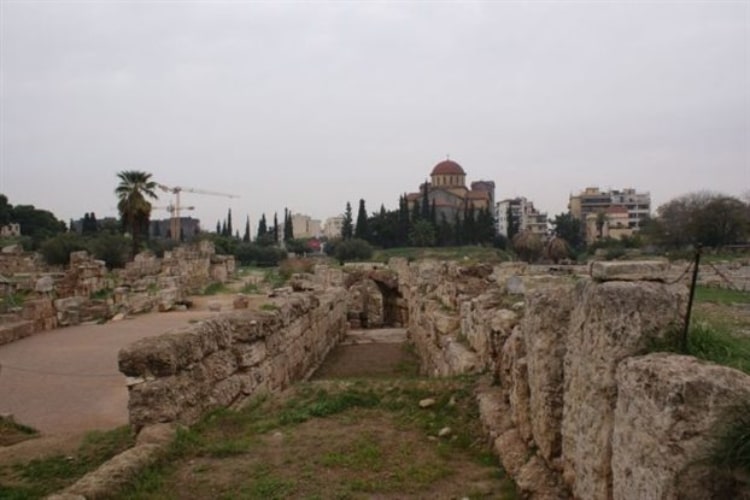
Iridanos led the waters he collected towards the area of Kerameikos. There was a marsh formed, since the waters were stagnated there and which was fed by the seasonal overflows of the waters of the Iridanos River.
This fact is initially certified by the writings of ancient writers such as Pausanias and Demosthenes. Then there are many stratigraphic data from the excavations since the layer of sludge and clay, which constituted the deposits of the marsh, was found perforated by holes of water-based plants (reeds) that constituted the vegetation of the wetland. The spread of the detailed deposits leads to the finding that the quagmire covered a total area of 3000 m2, with a length of 60 meters and a width of 50 meters. The level of the sea water fluctuated according to the seasonal supply of the supply of Iridanos.
Athens has many secret and unknown information that we learn by exploring it.
The unknown giant Tower in the Acropolis district that no longer exists
Frequently Asked Questions
The Iridanos was an underground river of ancient Athens and a tributary of the Ilissos river. It had its springs in Lycabettos hill and crossed the ancient city from east to west, passing near the Acropolis. Today, you can find the remains of its riverbed, which is about two meters wide, at the archaeological site of Kerameikos.
The Iridanos river was buried due to human needs and urban development. Because it was located adjacent to the Acropolis, which has been inhabited since at least 3500 BC, ancient Athenians decided to cover the river underground to make space for building houses and other structures. Eventually, it was converted into a drainage system.
The Iridanos river has been buried for approximately 3,000 years. This makes it the most damaged and longest-suffering river in Athens compared to other rivers like Kifissos and Ilissos, which have only suffered for about 100 years.
Ancient writers such as Pausanias and Demosthenes documented the existence of a marsh fed by Iridanos seasonal overflows. Archaeological excavations have confirmed this through stratigraphic data, including layers of sludge and clay deposits perforated by holes from water-based plants like reeds. The marsh covered approximately 3,000 square meters with a length of 60 meters and width of 50 meters.
The only visible remains of the Iridanos river today can be found at the Kerameikos archaeological site in Athens. There, you can see the riverbed, which measures approximately two meters in width. The river has been so buried for centuries that most people are unaware of its existence.


