


Athens may now be a capital of millions of inhabitants but things were not exactly the same about a century ago. In fact, it was more like a province. A small growing town. Athens in the 1900s a was very different city from the one that it is now.
Athens and its economy
At that period commerce blossomed in Athens, as well as various crafts, there was also great construction activity which created jobs for several of the many available labouring hands. Of course there was a great deal of poverty, which could easily be seen on the streets. The industry, which used steam as a driving force, was also under development.
In the area of Kerameikos,in Athens, one could find the flour mill of Mouzakis while in Aiolou Street there was the chocolate factory of Spyros Pavlidis. The Metaxourgio of A Douroutis, who bought the old factory of the “English Siric Company” and modernized it, was in full operation. These were the largest factories one would find in the center of the newly created capital of the Greek state.
A province of the 1900s
After the 1900s, Athens had a population of about 120,000 people. Earlier on, when it became the capital of the Greek state, the number of its inhabitants was much smaller.
The case about the population was precisely commentated by the historian Leonidas Kallivretakis, in the electronic edition of the publication of the “Archaeology of the City of Athens” of the National Research Foundation. “When it was chosen as the Capital of Greece, Athens was a village of 4,000 inhabitants and Piraeus was a trivial fish auction”. “Athens was , at the time, [1834] a negligible small town of about 10 to 12,000 inhabitants full of ruins, with a few houses at the feet of the Acropolis.”

We can say, confidently, that every district in Athens, identified with on area of the whole country. One understood that this was the case, from both the linguistic idioms and the products they sold. The people of Epirus had ovens, and they were also pretzel-sellers. The people of Thessalia were itinerant vendors selling hot chestnuts, salep and nuts. The people of Mykonos and Anafi were the best craftsmen. The people of Arcadia could be found in Omonia mainly as newspapermen, transporters and polishers. The people of Zakynthos sold perfumes and sweets especially mandolato in Athens, while the people of Roumeli who had pens with sheep and goats, were in the areas of Petralona, Abelokipoi, Turkovounia, Pedion tou Areos and Pagkrati.
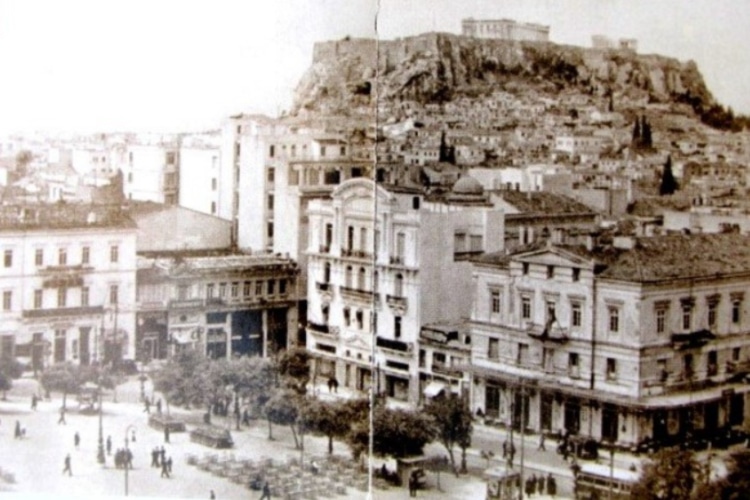
Another aspect of Athens that we only see in photos…
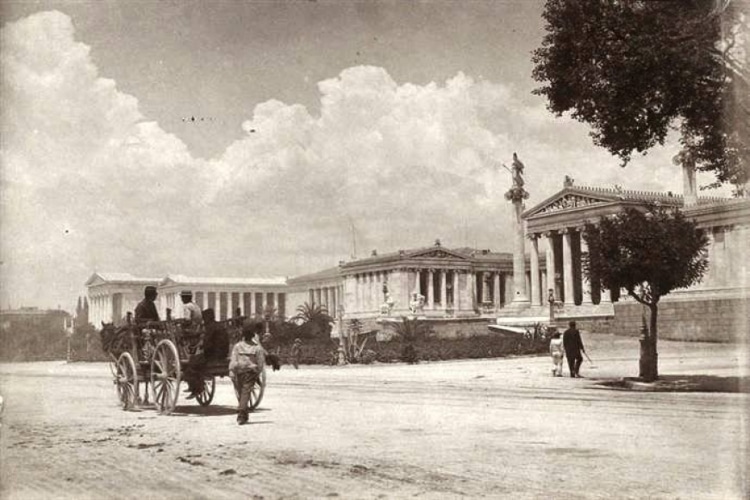
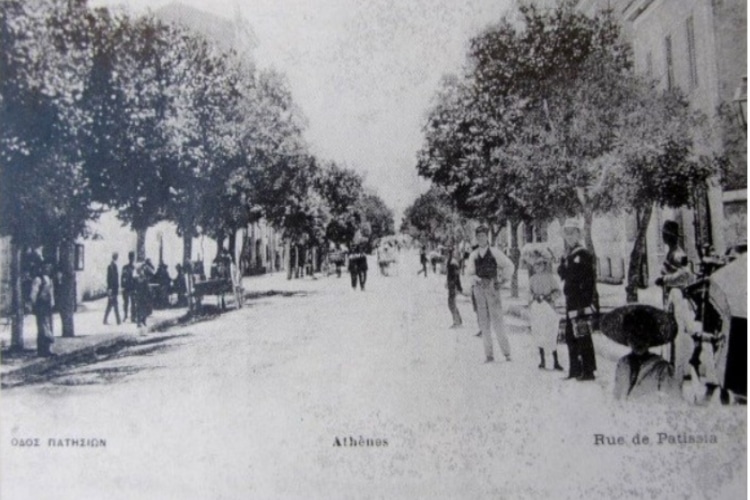
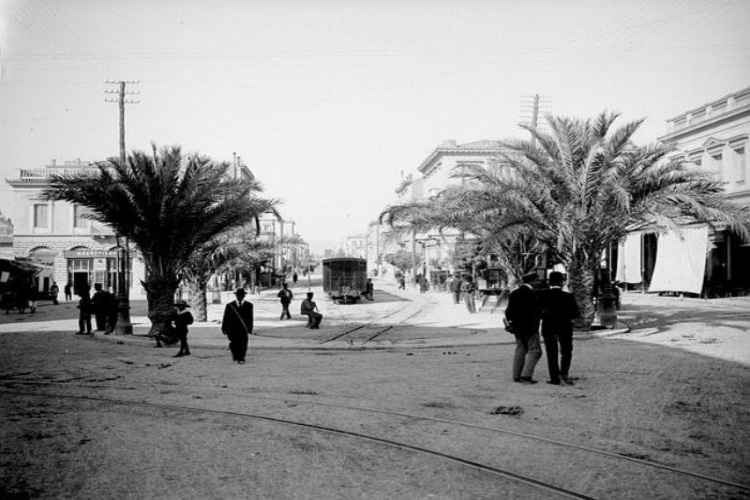
Photo Source: Facebook Group Old Athena
External photo: Carrington Weems
Ten authentic cookhouses that take us to a journey to the Old Athens
Frequently Asked Questions
Athens had a population of approximately 120,000 people in the 1900s. This was significantly larger than when it first became the capital of Greece in 1834, when it had only about 4,000 to 12,000 inhabitants.
The main industries in early 1900s Athens included commerce, crafts, and steam-powered manufacturing. Notable factories included Mouzakis flour mill in Kerameikos, Spyros Pavlidis chocolate factory on Aiolou Street, and A Douroutis Metaxourgio (silk factory), which was the modernized former English Siric Company factory.
When Athens was chosen as the capital of Greece in 1834, it was a negligible small town with only 4,000 inhabitants and Piraeus was merely a fish auction. Over the next century, Athens experienced great construction activity and economic development, growing to approximately 120,000 inhabitants by the 1900s.
Athens attracted migrants from across Greece. People from Epirus worked as oven makers and pretzel-sellers, Thessalians sold chestnuts and salep, Mykonians and Anafians were craftsmen, Arcadians worked as newspapermen and transporters, Zakynthians sold perfumes and sweets, and people from Roumeli raised sheep and goats in the outskirts of the city.
Athens in the 1900s was a small growing province with about 120,000 inhabitants, characterized by commerce, crafts, and construction activity alongside significant poverty. Modern Athens is now a capital city of millions, representing dramatic urban expansion and economic development compared to its provincial past a century ago.


