


If there is a classic and favourite place for a walk in the centre of Athens on a Sunday, it is none other than that of Monastiraki district. It is in the “must-see” of every tourist who comes to Athens but also a standard for those who live in the capital of Greece.
Monastiraki or “Outdoors Auction House” as it is its name today, starts from the south side of Ermou Street, at the height of Metropolis Church Square, and goes all way down to Thision Square. It is a large area containing the districts of Psyrri, Plaka and Thissio. But it wasn’t always called as it is now.
A long time ago the wider area around Monastiraki was the centre for the commercial and economic activities of the city. In antiquity times the Ancient Agora was there. Later on, during Roman times, the Roman market was there while during the Frankish and Turkish occupations Wheat Bazaar and the Old Market on Mitropoleos Street were at that area.
Kapnikarea: Unknown aspects of the temple that is in the centre of Athens
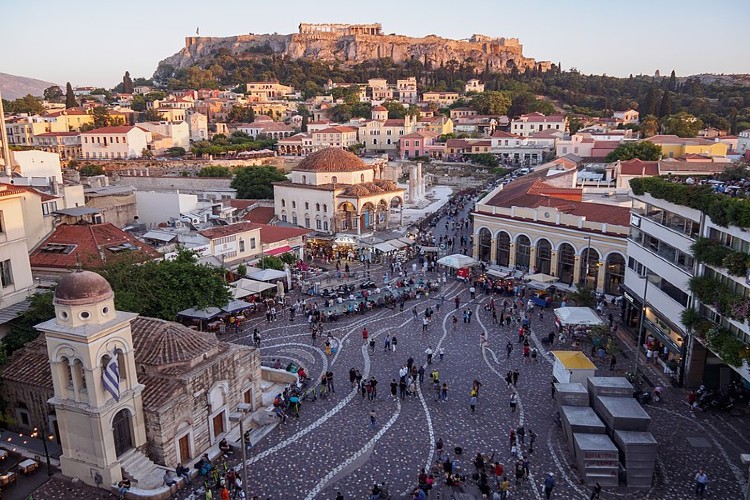
Photo Source: wikipedia.org
In the recent past, during the 19th century, it was called the Yousouroum. That name came from the Jewish antique dealer in the area, who had that name, Noah Yushuum. He had settled in the area and worked as a trader. Residents from different parts of Athens were shopping in his shop. He was distinguished for his morals and professional consistency and had earned a place in the hearts of the Athenians. Thus, the market acquired this name in his honour.
Monastiraki district today
Today, the area is still a centre of commercial activities. However, you will not find only antique shops or merchants in the form of the shops of the past. The majority of the shops on Hephaestos Street sell branded products. Most dealers and small sellers of antiques are now located in Abyssinia’s square. There you will see all the glamour of the past in an outdoor bazaar. Under the dust that covers an object, you can unfold stories from the past with your imagination. Men and women of another era who left together with Yushuum…
The metro and the train stop in Monastiraki district will bring you near it for one more walk. For a little shopping, a cup coffee with the view of the Acropolis and enjoying appetizers against the backdrop of ancient Athens…
External photography source: athensattica.com
Ermou street: Why the most commercial street of Athens was given that name.
Frequently Asked Questions
Monastiraki, meaning 'Outdoors Auction House,' has a rich historical background. In ancient times, the Ancient Agora was located there, followed by the Roman market during Roman times. During the Frankish and Turkish occupations, it hosted the Wheat Bazaar and Old Market. However, the name 'Yousouroum' in the 19th century came from Noah Yushuum, a respected Jewish antique dealer who settled in the area and became beloved by Athenians for his morals and professional consistency.
Noah Yushuum was a Jewish antique dealer who settled in the Monastiraki area during the 19th century. He worked as a trader and became distinguished for his ethical business practices and professional consistency. Due to his respected reputation and popularity among residents from different parts of Athens, the market area acquired the name 'Yousouroum' in his honour.
Monastiraki district starts from the south side of Ermou Street at the height of Metropolis Church Square and extends all the way down to Thision Square. It is a large area that encompasses the districts of Psyrri, Plaka, and Thissio, making it one of the most significant commercial and tourist areas in central Athens.
Today, Monastiraki remains a centre of commercial activities. While Hephaestos Street features shops selling branded products, most antique dealers and small sellers have relocated to Abyssinia Square, where you can explore an outdoor bazaar. The area also offers shopping, coffee shops with Acropolis views, and restaurants serving appetizers with a backdrop of ancient Athens. The metro and train station provide convenient access to the district.
Yes, Monastiraki is definitely a must-see destination for every tourist visiting Athens. It is also a standard walking spot for those living in the Greek capital, especially on Sundays. The district combines historical significance, commercial activities, and stunning views of the Acropolis, making it one of the most classic and favourite places for a walk in central Athens.


