


If you have ever searched for a place of romance in Athens, then it is sure that Lycabettus hill is one of your first options.
The highest point of Athens boasts for having one of the most beautiful views and not without a cause. But there are a few things as well, that many people don’t know about Lycabettus hill.
Let’s see some of them…
How Lycabettus hill got its name
Up to 1832 it was not called Lycabettus hill,but Angchesmos. There are different versions of the story: One of them mentions wolves roaming the area and thus, it was named like that, because of them. Another traces its etymology to the words wolf and I go, because of the appearance of the sun from there – as if to say, hill of the wolf. There is also a third version, which wants the name to be pre-Grecian and to mean mastoid hill.
What the myth says about the formation of Lycabettus hill
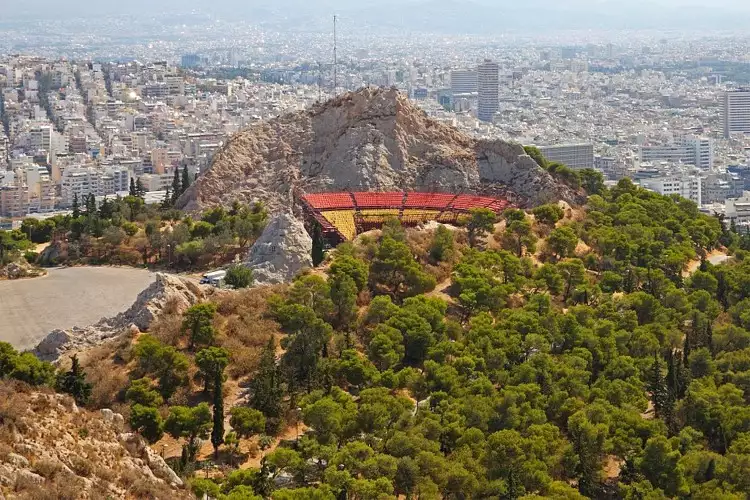
According to mythology, the hill of Lycabettus was formed by a rock that Athena carried from Penteli on her way to the Acropolis. She wanted to make a small intervention in her temple and raise its height a little more. On the way to the Acropolis, therefore, s he heard the news about the daughters of Kecrops, who had opened the basket which she had entrusted them to guard, inside which Erichthonios was. The goddess Athena was then upset and the rock fell out of her hands. So it became what the Athenians would later call the Lycabettus hill.
Ten authentic eateries in a trip through old Athens
When Its light decoration first started
Lycabettus hill was first cexorated with lights in 1835. Its light decoration was special with one hundred lanterns that formed a large “O”, the first letter of king Otto’s name. The second light decoration of the hill took place on March 25th of 1838, with branches burning forming a burning cross.
How Lycabettus hill became Chiller’s vision
The beauty of Lycabettus hill charmed even Ernest Chiller.The great architect had great plans for Lycabettus hill. At the end of the 19th century, he submitted to Charilaos Trikoupis a grandiose plan for the “Air Sanatorium”. In other words, he envisioned turning the hill into a therapeutic center. Among other things a hotel, coffee-shops, reading room, artificial waterfalls, fonts, fountains and playgrounds would be included. The plan was never implemented due to its high cost.
When the anchorage of Lycabettus hill was created
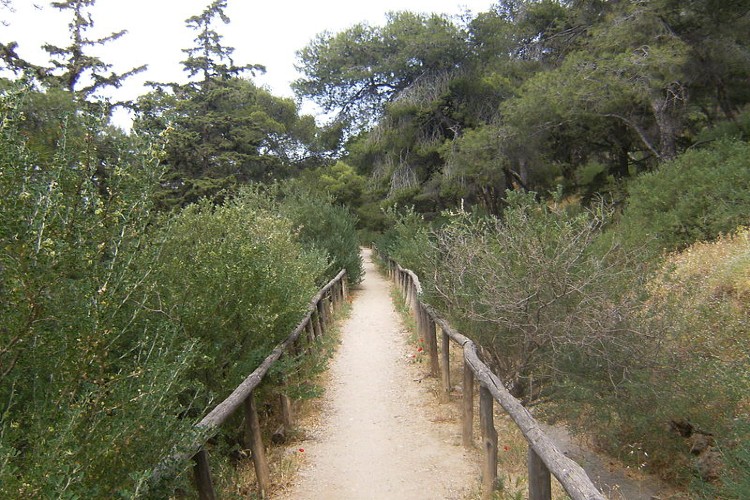
Another thing not known to many is the following: Between the church of Agioi Isidoroi and the old refectory of Lycabettus hill which is now in operation, the anchorage of Lycabettus hill was built in 1939. It was actually built at a depth of 100 meters, for the storage of state records and the protection of high-ranked persons in case of danger.
Photo Source: el.wikipedia.org
Travel to Greece – Google News – Follow us
Read Also:
Old Athens: Omonia Square and its history
What do the inscriptions on the Monument of the Unknown Soldier mean?
The water-carrier, the iceman and other vanished professions of old Athens
Follow exploringgreece.tv on Instagram and Facebook
Frequently Asked Questions
Lycabettus hill was not called by this name until 1832. Before that, it was known as Angchesmos. The name Lycabettus has several etymological origins: one version attributes it to wolves that roamed the area, another traces it to Greek words meaning 'wolf' and 'I go' referring to the sun's appearance, and a third suggests it is a pre-Grecian name meaning 'mastoid hill'.
According to Greek mythology, Lycabettus hill was formed when the goddess Athena dropped a rock she was carrying from Mount Penteli to the Acropolis. She intended to use the rock to increase the height of her temple, but upon hearing that the daughters of Kecrops had opened a forbidden basket containing Erichthonios, she became upset and the rock fell from her hands, creating the hill.
Lycabettus hill was first decorated with lights in 1835, featuring one hundred lanterns arranged to form a large 'O', the first letter of King Otto's name. The second light decoration occurred on March 25th, 1838, using burning branches to form a burning cross.
At the end of the 19th century, architect Ernest Chiller proposed a grandiose plan to transform Lycabettus hill into an 'Air Sanatorium' - a therapeutic center. The plan included a hotel, coffee shops, reading rooms, artificial waterfalls, fountains, and playgrounds. However, the project was never implemented due to its prohibitively high cost.
The anchorage of Lycabettus hill is an underground facility built in 1939 at a depth of 100 meters, located between the church of Agioi Isidoroi and the old refectory. It was constructed for the storage of state records and to provide protection for high-ranking persons in case of danger.


